Today's
EarthStation1.com 15% Off (Or More!) Commemorative Memorial Title:
The Historical View A Legacy In Pictures JPG Image Set CD Download
USB
Today, June 30, 2026
June 30: Chronology: Calendars: The
Months Of The Year: -- June ends, the sixth month of the year in
the Julian and Gregorian calendars, the latter being the most
widely used calendar in the world. It is named after the ancient
Roman goddess Juno, known by the title Regina ("Queen"),
the patroness goddess of Rome and the Roman Empire, protectress
and special counsellor of the state and who watched over the women
of Rome. She was a member of the Capitoline Triad (Juno
Capitolina) centered on the Capitoline Hill in Rome, a triad which
also included Jupiter and Minerva, goddess of war and wisdom. She
was equated to Hera, queen of the gods in Greek mythology and a
goddess of love and marriage. She was daughter of the god Saturn
and fertility earth goddess Ops; she was both sister and wife of
Jupiter, and the mother of Mars, Vulcan, Bellona, Lucina and
Juventas. Like Hera, her sacred animal was the peacock. She is
identified as the Etruscan goddess Uni. May's length is 30 days.
June succeeds May and precedes July. This month marks the start of
summer in the Northern Hemisphere and contains the summer
solstice, which is the day with the most daylight hours. In the
Southern Hemisphere, June is the start of winter and contains the
winter solstice, the day with the fewest hours of daylight out of
the year. In places north of the Arctic Circle, the June solstice
is when the midnight sun occurs, during which the Sun remains
visible even at midnight. The Atlantic hurricane season -- when
tropical or subtropical cyclones are most likely to form in the
north Atlantic Ocean -- begins on June 1 and lasts until November
30. Several monsoons and subsequent wet seasons also commence in
the Northern Hemisphere during this month. Multiple meteor showers
occur annually in June, including the Arietids, which are among
the most intense daylight meteor showers of the year; they last
between May 22 and July 2, peaking in intensity on June 8.
Numerous observances take place in June. Midsummer, the
celebration of the summer solstice in the Northern Hemisphere, is
celebrated in several countries. In Catholicism, this month is
dedicated to the devotion of the Sacred Heart of Jesus, and known
as the Month of the Sacred Heart. In the United States, June is
dedicated to Pride Month, a month-long observance of LGBT
individuals. Father's Day, which honours fathers and fatherhood,
occurs on the third Sunday in June in most countries. On Sale Till
Midnight PT!
https://store.earthstation1.com/the-historical-view-a-legacy-in-pictures-jpg-photo-cd.html
Today's
EarthStation1.com 15% Off (Or More!) Commemorative Memorial Title:
Before Stonewall The Making Of A Gay And Lesbian Community DVD MP4
USB
Today, June 30, 2026
June 30: Pride Month (LGBT Pride Month,
LGBTQ Month, LGBTQ+ Month): -- The month of June, dedicated to
celebration and commemoration of lesbian, gay, bisexual, and
transgender (LGBT) pride, concludes. Pride Month began after the
Stonewall riots, a series of gay liberation protests in 1969, and
has since spread outside of the United States. Modern-day Pride
Month both honors the movement for LGBT rights and celebrates LGBT
culture. While it's more widely accepted today than ever before,
history is able to tell long stories of why this was not the case
for a very long time. Pride Month is a time for each individual to
be proud of who they are and the unique offerings they have to
bring to the world. The concept of being gay was not often spoken
of or publicly expressed due to the pressure of American society
and the social norms that viewed being gay as a taboo and a mental
disorder. During the 1950's and 60's, there was a population of
people who did not believe in oppressing these rights, and they
stood against the government because of it. At the tip of the
iceberg, when the Stonewall Inn located in New York City started
being raided by police because it was a gay bar, people started
retaliating against police in defense of the gay bar and their
believed right to be gay in the world. This is an example of a
grass roots uprising that took place over the length of 6 days and
was the beginning of many people, who had previously been quiet,
starting to stand up for their cause. Support for LGBTQ+ pride has
since been growing steadily over the past few decades, even when
the LGBTQ+ lifestyle was considered taboo during the 1970's and
80's. As more people started backing up the movement and people
started understanding what being gay meant, Pride Month then
started becoming a more popular concept during the 1990's and
2000's. Multiple holidays arose out of the LGBTQ+ movement, and
Pride Month has become one of the biggest celebrations all over
the United States, with its main center of action in New York
City. In NYC, parades would commence along the streets and people
would dress up in their most colorful and prideful outfits and
celebrate the LGBTQ+ community for everyone to see. The
celebration also occurs in other parts of the world who join in
solidarity with the cause of freedom and rights for all. In 1999,
Bill Clinton officially recognized Gay & Lesbian Pride Month
This was the first time the federal government officially
recognized June to observe and celebrate what will become LGBT
Pride Month ten years later, and LGBTQ month 22 years later. On
Sale Till Midnight PT!
https://store.earthstation1.com/before-stonewall-the-making-of-a-gay-and-lesbian-community-dvd.html
Today's
EarthStation1.com 15% Off (Or More!) Commemorative Memorial Title:
The Homosexuals (1966) Mike Wallace Gore Vidal MP4 Video Download
DVD
Today, June 30, 2026
June 30: Queer Youth Of Faith Day: --
Embrace the empowering journey of LGBTQ+ young individuals finding
strength within their faith community's accepting embrace. It is
estimated that approximately 1.8 million youth between the ages of
13 and 24 will contemplate suicide each year, and at least one
person attempts suicide very 45 seconds. Many of these young
people feel lost and alone, often struggling to find acceptance
related to questioning their identities, genders or sexuality.
Queer Youth Of Faith Day has been founded to provide a safe space
for these young people to experience acceptance and care at a
critical time in their lives. Queer Youth Of Faith Day can trace
its roots back to 2019 when it was started by a group called
Beloved Arise. This non-profit group was the first national
organization in the US to celebrate and empower youth with a faith
who identify as queer. Statistics show that one in five LGBTQ+
youth consider their faith to be important to them. Whether they
connect with Christianity, Buddhism, Islam, Judaism or some other
spiritual space, all youths deserve to know that they are loved
and cared for! The purpose of Queer Youth Of Faith Day is to show
acceptance of, support for and encouragement toward young people,
particularly those who have felt like they are not accepted in
their communities of faith. Beloved Arise partners with several
organizations, including GLAAD, National LGBT Taskforce, NASDAQ,
and more. Together, these groups encourage people of faith to take
this opportunity to express care for the youth of today as well as
praying for them - for the safety, well-being and flourishing of
these young people. On Sale Till Midnight PT!
https://store.earthstation1.com/the-homosexuals-dvd-mike-wallace-1966-tv-documen1966.html
Today's
EarthStation1.com 15% Off (Or More!) Commemorative Memorial Title:
And Away We Go! US Cars + Bonus Internal Combusion Engine MP4 DVD
Today, June 30, 2026
June 30: National Corvette Day: -- June
30, 1953: The History Of The Automobile: The History Of The
Automotive Industry: Product Rollouts: Automobile Rollouts: The
Chevrolet Corvette: -- The first Chevrolet Corvette rolls off the
assembly line in Flint, Michigan. The Chevrolet Corvette, known
colloquially as the Vette or Chevy Corvette, continues to be a
sports car manufactured by Chevrolet, having been produced through
seven generations. The first model, a convertible, was introduced
at the GM Motorama in 1953 as a concept show car. Myron Scott is
credited for naming the car after the type of small, maneuverable
warship called a corvette. Originally built in Flint, Michigan and
St. Louis, Missouri, since 1981, the Corvette has been
manufactured in Bowling Green, Kentucky and is the official sports
car of the Commonwealth of Kentucky. While always being an
automobile known for speed and performance throughout its history,
the Corvette has evolved throughout the generations into becoming
the widely regarded - although never officially declared -
flagship model of the Chevrolet car brand. On Sale Till Midnight
PT!
https://store.earthstation1.com/and-away-we-go-american-automobile-history-dvd.html
Today's
EarthStation1.com 15% Off (Or More!) Commemorative Memorial Title:
Great Comet Crash: Shoemaker-Levy 9 Live + Doomsday Asteroid MP4
DVD
Today, June 30, 2026
June 30: International Asteroid
Day/National Meteor Watch Day (National Meteor Day): -- =========
International Asteroid Day will have everyone looking toward the
skies. The holiday was founded after the 2014 release of the film
51 Degrees North, which explores what would happen if an asteroid
were to strike London. The film's creative team (many of whom are
scientists) wanted to raise more awareness about the threat of
asteroids to earth, and how we can help protect ourselves. To make
that happen, they formed a foundation, and in 2015, they
celebrated the world's first International Asteroid Day. There are
over one million asteroids in space that could potentially strike
the earth, but modern scientists have only discovered about one
percent of them. To combat this, Asteroid Day's founders, as well
as a host of accomplished scientists, created the 100X Asteroid
Declaration. The declaration aims for scientists to work to
increase the rate of asteroid discovery to 100,000 per year within
a decade. International Asteroid Day focuses on spreading the word
of the declaration and helping fellow Earthlings prepare for a
potential asteroid impact. ========= National Meteor Watch Day
encourages us to look to the stars to witness one of the night
sky's most thrilling sights. Also known as National Meteor Day, on
a cloudless night, people turn their eyes to the heavens in hopes
of spotting the glow of a falling star. Daily millions of meteors
enter the Earth's atmosphere. When space debris, such as pieces of
rock, enter the Earth's atmosphere the friction causes the
surrounding air to become scorching hot. This "shooting star"
streaking through the sky surrounded by flaming hot air is a
meteor. The majority of the meteoroids that cause meteors are only
the size of a pebble. Meteors sometimes occur in showers. It's an
excellent time to plan for a meteor-watching party. Whether we
catch a few stray falling stars or witness an entire meteor
shower, this day calls for an evening with friends and family
under the stars. Identify the constellations while waiting to make
a wish or two. Sounds like a romantic night, as well. In the
Northern Hemisphere, one of the most active meteor showers is the
Perseids, active from mid-July to late August. Named after the
constellation Perseus where the majority of the activity takes
place, particles released by the comet 109P/Swift-Tuttle cause the
meteors to shower down onto Earth. One of the most impressive
meteor showers in the Northern Hemisphere, the Perseids put on
dazzling displays. Some years, on a clear night with a new moon,
skywatchers view more than one meteor per minute! We usually
observe meteors at night, and they are visible when they are about
34 to 70 miles above the Earth. When they come within 31-51 miles
of the Earth, they often disintegrate. Their glow time is usually
about a second. Despite the large number of meteors we see, a
small percent of meteoroids hit the Earth's atmosphere and then
skip back into space. The chemical composition and the speed of
the meteoroid will cause different hues to the light. Possible
colors and elements producing them include Orange/yellow (sodium),
Yellow (iron), Blue/green (copper), Purple (potassium) and Red
(silicate). To observe National Meteor Watch Day, plan a night for
sky viewing, gather some friends together, a blanket, and find a
place far from the city lights on a cloudless night. Use
#NationalMeteorWatchDay to share on social media. On Sale Till
Midnight PT!
https://store.earthstation1.com/great-comet-crash-live-shoemakerlevy-9-jupiter-collisions-dvd-mp4-u94.html
Today's
EarthStation1.com 15% Off (Or More!) Commemorative Memorial Title:
Disraeli: Portrait Of A Romantic TV Miniseries DVD Download USB
Drive
Today, June 30, 2026
June 30: International Day Of
Parliamentarism: -- Observed to honor the parliamentary systems of
governance. First observed by a United Nations General Assembly
Resolution in 2018, the day recognizes the unique and enduring
system of parliamentary democracy as being the standard for
political representation. The day also recognizes how a
parliamentary system can conduct self-evaluations to take stock of
progress, identify challenges, and formulate ways to address them.
The International Day of Parliamentarism is the annual celebration
of the parliamentary system of governance, that being a type of
legislature, or law-making body, of a state to serve three
functions: representing the electorate, making laws, and
overseeing the executive government via hearings and inquiries.
The day honors the founding values of a parliamentary system and
the promise of political representation to billions of people. The
United Nations General Assembly recognizes the role of parliaments
in ensuring greater accountability and transparency of the people
in power. International Day of Parliamentarism marks the
anniversary of the Inter-Parliamentary Union (I.P.U.). Established
in 1889 as the formal representation of the parliamentary systems
of governance, the I.P.U. is a global organization that works to
promote democratic governance, human representation, democratic
values, and the civil aspirations of a society. The I.P.U. does
critical work for democracy, peace, gender equality, human rights,
youth empowerment, political dialogue, and much more. The
organization also issues toolkits to inspire the participation of
women, minorities, young people, disabled people, and minorities
in representative democracy. Parliaments are the cornerstone of
functioning democracies. The word originates from the French word
'parler,' which means 'to talk.' For millions of people, political
representation is a far-fetched dream. The I.P.U. stands in
solidarity with activists, social workers, and enthusiasts who
wish to be governed by the structure and norms of parliamentary
democracy. International Day of Parliamentarism also serves as a
reminder for us to strive for better representation in the halls
of power. The key goal of a parliament is to give your voice to
the voiceless. The work is difficult, and can only be accomplished
with the participation of the entire citizenry. On Sale Till
Midnight PT!
https://store.earthstation1.com/disraeli-portait-of-a-romantic-tv-series-dvd-set-4-disc4.html
Today's
EarthStation1.com 15% Off (Or More!) Commemorative Memorial Title:
America: The Second Century Documentary Series DVD, Download, USB
Today, June 30, 2026
June 30, 1892: Labor Union Disputes
(Trade Union Disputes): Strikes (Strike Actions, Labor Strikes,
Labour Strikes): Armed Conflicts In American Labor Union History:
Steel Industry Strikes: Lockouts: The Homestead Strike (The
Homestead Steel Strike, The Homestead Massacre, The Battle Of
Homestead): -- The Homestead Strike, an industrial lockout and
strike that began on July 1, 1892, culminating in a battle in
which strikers defeated private security agents on July 6, 1892,
is made inevitable when local leaders of The Amalgamated
Association Of Iron And Steel Workers (AA) at a mass meeting
review the final negotiating sessions with the Homestead Steel
Works near Pittsburgh, Pennsylvania and announce their
determination that the company, under orders from the company's
chief of operations, the pathologically anti-union industrialist
Henry Clay Frick, had made the foolish decision to break their
contract with the AA by locking out workers a day before their
contract expired. On July 6, 1892, three thousand eight hundred
striking steelworkers would engage in a day-long battle with
Pinkerton agents during the Homestead Strike, leaving ten dead and
dozens wounded. The Homestead Strike (July 1 - November 20, 1892),
also known as The Homestead Steel Strike, The Homestead Massacre,
or The Battle Of Homestead, was an industrial lockout and strike
which began on July 1, 1892. It culminated in a battleon July 6,
1892 between, on the one hand, strikers of the Amalgamated
Association of Iron and Steel Workers (AA) allied with the Knights
Of Labor, and on the other hand, the Carnegie Steel Company's
employment of the private security agents of the Pinkerton Agency.
The battle was a major setback and pivotal loss in U.S. labor
history, broke the AA as a force in the American labor movement
and set back efforts to unionize America's steelworkers. On Sale
Till Midnight PT!
https://store.earthstation1.com/america-the-second-century-us-2nd-100-years-history-621006.html
Today's
EarthStation1.com 15% Off (Or More!) Commemorative Memorial Title:
Hitler (1963) Richard Basehart Maria Emo MP4 Video Download DVD
Today, June 30, 2026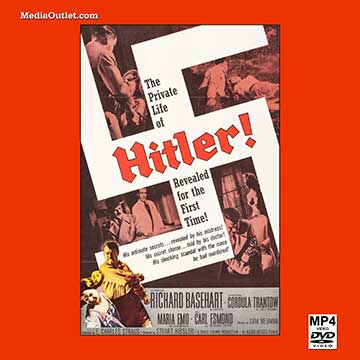
June 30, 1934: The Interwar Period (The
Aftermath Of World War I, The Interbellum, Between The Wars): The
Road To War: Nazi Germany (The German Reich, The Third Reich):
Purges: Purges In Nazi Germany: The Night Of The Long Knives
(German: Nacht Der Langen Messer) (Operation Hummingbird [German:
Unternehmen Kolibr], The Rohm Purge): -- #DOTD: German Chancellor
Adolf Hitler, urged on by Hermann Goring and Heinrich Himmler,
orders a series of political extrajudicial executions in order to
consolidate his power and alleviate the concerns of the German
military about the role of Ernst Rohm and the Sturmabteilung (SA),
the Nazis' paramilitary organization. Nazi propaganda presented
the murders as a preventive measure against an alleged imminent
coup by the SA under Rohm - the so-called Rohm Putsch. At least 85
people died during the purge, although the final death toll may
have been in the hundreds, with high estimates running from 700 to
1,000, and more than a thousand perceived opponents were arrested.
Most of the killings were carried out by the Schutzstaffel (SS)
paramilitary force under Himmler and its Security Service (SD) and
Gestapo (secret police) under Reinhard Heydrich. Goring's personal
police battalion also took part in the killings. Those killed
included head of the SA Ernst Rohm, Nazi Party leader Gregor
Strasser, former and last Chancellor of Germany during the era of
the Weimar Republic Kurt Von Schleicher, and the man who had
suppressed Adolf Hitler's Munich Beer Hall Putsch in 1923,
Bavarian politician Gustav Ritter Von Kahr. The purge strengthened
and consolidated the support of the Wehrmacht for Hitler, and the
murders of the SA leaders were also intended to improve the image
of the Hitler government with a German public that was
increasingly critical of thuggish SA tactics. It also provided a
legal grounding for the Nazis, as the German courts and cabinet
quickly swept aside centuries of legal prohibition against
extrajudicial killings to demonstrate their loyalty to the regime.
The Night of the Long Knives was a turning point for the German
government. It established Hitler as the supreme administrator of
justice of the German people, as he put it in his July 13 speech
to the Reichstag. Hitler saw the independence of the SA and the
penchant of its members for street violence as a direct threat to
his newly gained political power. He also wanted to conciliate
leaders of the Reichswehr, the German military, who feared and
despised the SA as a potential rival, in particular because of
Rohm's ambition to merge the army and the SA under his own
leadership. Additionally, Hitler was uncomfortable with Rohm's
outspoken support for a "second revolution" to
redistribute wealth. In Rohm's view, President Hindenburg's
appointment of Hitler as Chancellor on January 30, 1933 had
brought the Nazi Party to power, but had left unfulfilled the
party's larger goals. Finally, Hitler used the purge to attack or
eliminate German critics of his new regime, especially those loyal
to Vice-Chancellor Franz Von Papen, as well as to settle scores
with old enemies. Before its execution, its planners sometimes
referred to the purge as Hummingbird (German: Kolibri), the
codeword used to send the execution squads into action on the day
of the purge. The codename for the operation appears to have been
chosen arbitrarily. The phrase "Night of the Long Knives"
in the German language predates the killings and refers generally
to acts of vengeance. #OperationHummingbird #UnternehmenKolibri
#NightOfTheLongKnives #NachtDerLangenMesser #TheRohmPurge
#AdolfHitler #Hitler #HermannGoring #HermannGoering #Goering
#Goring #HeinrichHimmler #Himmler #ReinhardHeydrich #SS
#Schutzstaffel #ErnstRoehm #ErnstRohm #SA #SturmAbteilung
#StormTroopers #Purges #ThirdReich #NaziGermany #HeinrichHimmler
#MP4 #VideoDownload #DVD On Sale Till Midnight PT!
https://store.earthstation1.com/hitler-1963-richard-basehart-maria-emo-mp4-video-download-dvd.html
Today's
EarthStation1.com 15% Off (Or More!) Commemorative Memorial Title:
SS: 1923-1945 History Of The Schutzstaffel Nazis DVD, MP4, USB
Stick
Today, June 30, 2026
June 30, 1934: The Interwar Period (The
Aftermath Of World War I, The Interbellum, Between The Wars): The
Road To War: Nazi Germany (The German Reich, The Third Reich):
Purges: Purges In Nazi Germany: The Night Of The Long Knives
(German: Nacht Der Langen Messer) (Operation Hummingbird [German:
Unternehmen Kolibr], The Rohm Purge): -- #DOTD: Karl Ernst, SA
Gruppenfuhrer who from March 1933 on was the SA Commander in
Berlin, who prior to joining the Nazi Party had been a hotel
bellhop and a bouncer at gay nightclubs, alleged to have started
the Reichstag Fire, one of the chief participants in the
extrajudicial execution of Red Front Fighter Albrecht Hohler and
who was himself extrajudicially executed in the Night of the Long
Knives (b. September 1, 1904) #dies when he is executed by firing
squad six weeks after Hitler served as best man at his wedding,
either because he knew too much about the Reichstag Fire, or
because he was a "Pink Nazi" (a closet homosexual), or
both. Karl Ernst was born in Berlin, Kingdom of Prussia, German
Empire, the son of a cavalryman. It has been suggested that it was
he who, with a small party of stormtroopers, passed through a
passage from the Palace of the President of the Reichstag, and set
the Reichstag building on fire on the night of February 27, 1933,
rather than Marinus van der Lubbe, the young Dutch communist who
convicted and executed for setting the fire. There is evidence
indirectly to substantiate this: Gisevius at Nuremberg implicated
Goebbels in planning the fire, Rudolph Diels stated that Goering
knew how the fire was to be started, and General Franz Halder
stated that he had heard Goering claim responsibility for the
fire. On 30 June 1934, Ernst had just married, and was in Bremen
on his way to Madeira to honeymoon with his new wife. SA Leader
Ernst Roehm, whose inner circle included Ernst, had repeatedly
called for a "second revolution" that would introduce
socialism into the Reich and banish the old Conservative forces of
business and government. Fearing the socialistic tendencies of the
SA, along with Roehm's ambition to absorb the Reichswehr into the
SA, conservative elements in the German Army and Kriegsmarine
pressed for an elimination of SA power. Adolf Hitler-who had
served as Ernst's best man at his wedding six weeks
earlier-undertook a purge of the SA, an event known to history as
the Night of the Long Knives. It lasted until July 2, 1934. Ernst
was arrested in Bremerhaven together with his wife and his friend
Martin Kirschbaum as he was about to get aboard a cruiser in order
to travel to Madeira where he planned to spend his honeymoon.
Later on he was handed over to an SS-commando unit led by Kurt
Gildisch, flown back to Berlin and taken to the barracks of the
Leibstandarte Adolf Hitler, where he was shot by a firing squad in
the early evening of June 30. According to the official death list
drawn up for internal-administrative use by the Gestapo he was one
of fourteen people shot on the grounds of the Leibstandarte.
#KarlErnst #PinkNazis #PinkSwastika #SA #ReichstagFire
#NightOfTheLongKnives #NachtDerLangenMesser #SturmAbtielung
#StormTroopers #Purges #ThirdReich #NaziGermany #MP4
#VideoDownload #DVD On Sale Till Midnight PT!
https://store.earthstation1.com/ss-19231945-dvd-schutzstaffel-history-doc19231945.html
Today's
EarthStation1.com 15% Off (Or More!) Commemorative Memorial Title:
Russian Right Stuff: Soviet Space Program TV Series DVD, Download,
USB
Today, June 30, 2026
June 30, 1971: The History Of Rocketry:
The History Of Spaceflight: The Aftermath Of World War II: The
Cold War: The Space Age: The Space Race: The Soviet Space Program:
Human Spaceflight Programs: The Soyuz Programme: Soyuz 11
(Russian: Union 11): -- #DOTD: #RIP: The crew of the Soviet Soyuz
11 spacecraft #dies, killed when their air supply escapes through
a faulty valve. Soyuz 11 was the only manned mission to board the
world's first space station, Salyut 1 (Soyuz 10 had soft-docked
but had not been able to enter due to latching problems). The
mission arrived at the space station on 7 June 1971 and departed
on 29 June. The mission ended in disaster when the crew capsule
depressurized during preparations for reentry, killing the
three-man crew. The Soyuz 11 crew members were Georgy Dobrovolsky,
Vladislav Volkov, and Viktor Patsayev. The three crew members of
Soyuz 11 are the only humans known to have died while in space
(Cosmonaut Vladimir Komarov died in Soyuz 1 during reentry when
its parachute fails to open). On Sale Till Midnight PT!
https://store.earthstation1.com/russian-right-stuff-dvd-set-space-program-secret-history-2-disc2.html
Today's
EarthStation1.com 15% Off (Or More!) Commemorative Memorial Title:
War Props: The Ilyushin IL-2 Sturmovik DVD, MP4, USB Flash Drive
Today, June 30, 2026
June 30, 1995: #DOTD: #RIP: Georgy
Beregovoy, Ukrainian-Russian general, Soviet Il-2 Sturmovik pilot,
and cosmonaut who commanded the space mission Soyuz 3 of October
26 - 30, 1968 (b. April 15, 1921) #dies during heart surgery aged
74 in Moscow, Russia. He is buried in the Novodevichy Cemetery in
Moscow. Georgy Beregovoy was born Georgy Timofeyevich Beregovoy in
Fedorivka, Poltava Oblast, Ukrainian Soviet Socialist Republic
(now Ukraine). Beregovoy graduated from school in 1938 at
Yenakieve, Donetsk Oblast, Ukraine. He joined the Soviet Air
Forces (VVS) in 1941, and was soon assigned to a ground-attack
unit flying the Ilyushin Il-2 "Shturmovik". He flew some
185 combat sorties during the course of World War II and rose
quickly through the ranks, finishing the war as a captain and
squadron commander. His corps commander was then-colonel Nikolai
Kamanin, a celebrated polar aviator and a future head of the
cosmonaut training in the Soviet space program, which would turn
important later. Following the war, he became a test pilot, and
over the next sixteen years test-flew some sixty different
aircraft, rising to the rank of colonel and the position of deputy
chief of the air force's flight-testing department. In 1962, he
applied and was accepted for cosmonaut training, sponsored by his
former WWII commander, General Kamanin, who was the head of the
cosmonaut training at the time. At the time of his space flight,
Beregovoy was 47 years of age: he was the earliest-born human to
go to orbit, being born three months and three days earlier than
the second earliest-born man in orbit - John Glenn, but later than
X-15 pilot Joe Walker who made 2 (or 3, according to USAF
definition) suborbital space flights. From 1972 to 1987, Beregovoy
headed the Yuri Gagarin Cosmonaut Training Center. On Sale Till
Midnight PT!
https://store.earthstation1.com/war-props-the-ilyushin-il2-sturmovik-dvd-mp4-usb-flash-dri24.html
Today's
EarthStation1.com 15% Off (Or More!) Commemorative Memorial Title:
The Stasi The East German Secret Police Documentary DVD, Download,
USB
Today, June 30, 2026
June 30, 1893: #BOTD: Walter Ulbricht,
German soldier and politician who played a leading role in the
creation of the Weimar-era Communist Party of Germany (KPD) and
later (after spending the years of Nazi rule in exile in France
and the Soviet Union) in the early development and establishment
of East Germany (the German Democratic Republic) (d. August 1,
1973) is #born Walter Ernst Paul Ulbricht in Leipzig, Kingdom of
Saxony, German Empire. As the First Secretary of the Socialist
Unity Party 1950 to 1971, Ulbricht was the chief decision maker in
East Germany. From President Wilhelm Pieck's death in 1960, he was
also the East German head of state until his own death in 1973.
Walter Ulbricht died at a government guesthouse in Gross Dolln
near Templin, Bezirk Neubrandenburg, East Germany, north of East
Berlin, during the World Festival of Youth and Students, having
suffered a stroke two weeks earlier, aged 80. He was honoured with
a state funeral, cremated and buried at the Memorial to the
Socialists (German: Gedenkstatte der Sozialisten) in the
Friedrichsfelde Central Cemetery, Berlin. On Sale Till Midnight
PT!
https://store.earthstation1.com/stasi-dvd-the-east-german-secret-police-investigative-report.html
Today's
EarthStation1.com 15% Off (Or More!) Commemorative Memorial Title:
The STB: Changing The Guard Czechoslovakia Secret Police DVD, MP4,
USB
Today, June 30, 2026
June 30, 1945: The Aftermath Of World War
II: The Cold War: The Eastern Bloc (The Communist Bloc, The
Socialist Bloc, The Soviet Bloc): Intelligence And Security
Agencies: The Stasi (Czech: Statni Bezpecnost, Slovak: Statna
Bezpecnost, "State Security") (STB, StB) (German:
Ministerium Fur Staatssicherheit, "The Ministry For State
Security" [MFS, MfS]): --The STB, the secret police force in
communist Czechoslovakia from 1945 to its dissolution in 1990, is
founded. It served as an intelligence and counter-intelligence
agency, and dealt with any activity that was considered opposition
to the Communist Party of Czechoslovakia and the state. The StB
was controlled by the Communist Party of Czechoslovakia, who used
the StB as an instrument of power and repression; State Security
spied on and intimidated political opponents of the Party and
forged false criminal evidence against them, facilitating the
communists' rise to power in 1948. Even before Czechoslovakia
became a communist state, the StB obtained forced confessions by
means of torture, including the use of psychoactive drugs,
blackmail and kidnapping. After the coup d'etat of 1948, these
practices developed under the tutelage of Soviet advisers. Other
common practices included telephone tapping, permanent monitoring
of apartments, intercepting private mail, house searches,
surveillance, and arrests and indictment for so-called "subversion
of the republic". After the coup, the StB conducted Operation
Border Stone to capture citizens who attempted to defect and cross
the Iron Curtain. StB was the main supporter of the Red Brigades,
an Italian far-left militant organization. In cooperation with the
Palestine Liberation Organization, the StB conducted logistic
support and training for Red Brigades in PLO training camps in
North Africa and Syria. The StB's part in the fall of the regime
in 1989 remains uncertain. The reported murder of a student by
police during a peaceful demonstration in November 1989 was the
catalyst for wider public support and further demonstrations,
leading to the overthrow of the communist regime. According to StB
agent Ludvik Zifcak, he was used to impersonate a fictitious dead
student, Martin Smid. However, in 1992, the Czechoslovak
parliamentary commission for investigation of events of November
17, 1989, has ruled out Zifcak's testimony, stating that "the
role of former StB lieutenant L. Zifcak was only marginal, without
any connection to critical events and without any active effort to
influence these events. Investigation of related circumstances has
indisputably proved that L. Zifcak's testimony that attributes a
key role in November's events to himself is based on facts, which
are either technically impossible and unfeasible, or contradict
actions of persons mentioned by him, which aimed to completely
different goals." State Security was dissolved on February 1,
1990. The current intelligence agency of the Czech Republic is the
Security Information Service. Former employees and associates
(informers) of the StB are currently banned from taking certain
jobs, such as legislators or police officers. The Act on
Lawlessness of the Communist Regime and on Resistance Against It
states that the StB, as an organisation based on the ideology of
the Communist Party, "aimed to suppress human rights and
democracy through its activities" and thus based on a
criminal ideology. The State Security was a part of the National
Security Corps (Czech: Sbor narodni bezpecnosti, SNB; Slovak: Zbor
narodnej bezpecnosti, ZNB) along with Public Security (Czech:
Verejna bezpecnost, VB; Slovak: Verejna bezpecnost, VB) - a
uniformed force that performed standard police duties. Both forces
worked at regional and district levels, supervised by the
Ministries of the Interior of the Czech and Slovak Socialist
Republics, but operationally directed by the federal Ministry of
Interior. In the early 1990s former dissident and "StB
hunter" Petr Cibulka published the names of over 200,000
alleged StB officers and collaborators, who spied and reported on
family members, friends, neighbours, and colleagues. Pavel Bret, a
deputy director of the Office for the Documentation and the
Investigation of the Crimes of Communism, criticized Cibulka's
lists, saying: "It's dangerous to apply sweeping
blacklisting. We shouldn't forget who compiled them. If [Cibulka]
wants to be objective, he should also inform the public how people
had been recruited -- that it was often through compromising
documents, extortion, beatings -- or their collaboration was
falsified." In 2003, the Czech Interior Ministry released an
official list of 75,000 StB agents and collaborators, including
3,000 names of collaborators from abroad. According to the Radio
Prague, "The Ministry says it contains less names than that
of Petr Cibulka because it only lists those who collaborated with
the StB knowingly, and not people who were considered as potential
informants." On Sale Till Midnight PT!
https://store.earthstation1.com/the-stb-changing-the-guard-dvd-secret-police-of-czechoslovakia.html
Today's
EarthStation1.com 15% Off (Or More!) Commemorative Memorial Title:
The Man Who Saw Tomorrow: Nostradamus w/ Orson Welles DVD, MP4,
USB
Today, June 30, 2026
June 30, 1559: The French Monarchy (The
Monarchy Of The Kingdom Of France): Occultism: Prophecy:
Divination: Nostradamus (Michel De Nostredame): The Quatrains Of
Nostradamus: Century I, Quatrain 35 [CI, Q 35] (The Death Of King
Henry II Of France): -- King Henry II Of France is mortally
wounded in a jousting match against Gabriel, comte de Montgomery,
captain of the King's Scottish Guard, at a tournament held near
Place des Vosges to celebrate the Peace of Cateau-Cambresis with
his longtime enemies, the Habsburgs of Austria, and to celebrate
the marriage of his daughter Elisabeth of Valois to King Philip II
of Spain. During a jousting match, King Henry, rather than wear
the favour (ribbon, also known as the colors) of his wife,
Catherine de' Medici, wore the colors of Diane de Poitiers, his
French courtier noblewoman mistress whose beauty is immortalised
by the paintings of Francois Clouet and other anonymous painters,
and by Jean Goujon's statue Fountain of Diana, the latter
currently residing in the Louvre Museum. During the joust, Henry
was wounded in the eye by a fragment of Gabriel Montgomery's
splintered lance. Despite the efforts of royal surgeon Ambroise
Pare, the king died of sepsis on July 10 1559. He was buried in a
cadaver tomb in Saint Denis Basilica. Henry's death played a
significant role in the decline of jousting as a sport,
particularly in France. As Henry lay dying, Queen Catherine
limited access to his bedside and denied his mistress Diane de
Poitiers permission to see him, even though he repeatedly asked
for her. Following his death, Catherine sent Diane into exile,
where she lived in comfort on her own properties until her death.
It was the practice to enclose the heart of the king in an urn.
The Monument to the Heart of Henry II is in the collection of the
Louvre, but was originally in the Chapel of Orleans beneath a
pyramid. The original bronze urn holding the king's heart was
destroyed during the French Revolution, and a replica was made in
the 19th century. The marble sculpture which holds the urn, The
Three Graces, executed from a single piece of marble by Germain
Pilon, the sculptor to Catherine de' Medici, survives. Henry was
succeeded by his sickly fifteen-year-old son, Francis II. Francis
was married to sixteen-year-old Mary, Queen Of Scots, who had been
his childhood friend and fiancee since her arrival at the French
court when she was five. Francis II died 18 months later in 1560,
and Mary returned to Scotland the following summer. Francis II was
succeeded by his ten-year-old brother Charles IX. His mother,
Catherine de Medici, acted as Regent. Nostradamus (1503-1566),
French physician, astrologer and seer who served King Henry II as
physician and astrologer, and whose published collections of
prophecies have since become widely famous, such as his best known
book Les Propheties (The Prophecies) (1555), is believed by many
to have predicted Henry II's death and the manner of it in Century
I, Quatrain 35 [CI, Q 35]: "The young lion shall overcome the
older one, on the field of combat in single battle, He shall
pierce his eyes in a golden cage, Two forces one, then he shall
die a cruel death." On Sale Till Midnight PT!
https://store.earthstation1.com/the-man-who-saw-tomorrow-dvd-nostradamus-orson-welles.html
Today's
EarthStation1.com 15% Off (Or More!) Commemorative Memorial Title:
Insanity On Trial James Garfield's Killer Charles Guiteau DVD MP4
USB
Today, June 30, 2026
June 30, 1882: #DOTD: Charles J. Guiteau,
American writer and lawyer (b. September 8, 1841) #dies when he is
hanged in Washington, D.C. at approximately 10 A.M. for the
assassination of U.S. President James Garfield, just two days
before the first anniversary of his shooting him. Charles Julius
Guiteau falsely believed he had played a major role in Garfield's
victory, for which he should be rewarded with a consulship. While
being led to his execution, Guiteau was said to have continually
smiled and waved at spectators and reporters. He notoriously
danced his way to the gallows and shook hands with his
executioner. On the scaffold, as a last request, he recited a poem
called "I am Going to the Lordy", which he had written
during his incarceration. He had originally requested an orchestra
to play as he sang his poem, but this request was denied. After he
finished reading his poem, a black hood was placed over the
smiling Guiteau's head and moments later the gallows trapdoor was
sprung, the rope breaking his neck instantly with the fall.
Guiteau's body was not returned to his family, as they were unable
to afford a private funeral, but was instead autopsied and buried
in a corner of the jailyard. Upon his autopsy it was discovered
that Guiteau had the condition known as phimosis, an inability to
retract the foreskin, which at the time was thought to have caused
the insanity that led him to assassinate Garfield. With tiny
pieces of the hanging rope already being sold as souvenirs to a
fascinated public, rumors immediately began to swirl that jail
guards planned to dig up Guiteau's corpse to meet demands of this
burgeoning new market. Fearing scandal, the decision was made to
disinter the corpse. The body was sent to the National Museum of
Health and Medicine in Maryland, which preserved Guiteau's brain
as well as his enlarged spleen discovered at autopsy and bleached
the skeleton. These were placed in storage by the museum. Parts of
Guiteau's brain remain on display in a jar at the Mutter Museum in
Philadelphia. Charles J. Guiteau was born Charles Julius Guiteau
in Freeport, Illinois. Guiteau was so offended by the Garfield
administration's rejections of his applications to serve in Vienna
or Paris as payment of this imagined political debt that he
decided to kill Garfield, and shot him at 9:30 am on July 2, 1881
at the Baltimore and Potomac Railroad Station in Washington, D.C.
Garfield died 79 days later in Elberon, New Jersey on September
19, 1881 from infections related to the wounds, less than four
months into his term as president. Once Garfield died, the
government officially charged Guiteau with murder. He was formally
indicted on October 14, 1881, on the charge of murder, which was
previously attempted murder after his arrest. Guiteau pleaded not
guilty to the charge. The trial began on November 17, 1881, in
Washington, D.C. The presiding judge in the case was Walter Smith
Cox. Although Guiteau would insist on trying to represent himself
during the entire trial, the court appointed Leigh Robinson to
defend Guiteau. In less than a week of trial, Robinson retired
from the case. George Scoville then became lead counsel for the
defense. While Scoville's legal experience lay in land title
examination, he had married Guiteau's sister and was thus obliged
to defend him in court when no one else would. Wayne MacVeagh, the
U.S. Attorney General, served as the chief prosecutor. MacVeagh
named five lawyers to the prosecution team: George Corkhill,
Walter Davidge, retired judge John K. Porter, Elihu Root, and E.B.
Smith. Guiteau's trial was one of the first high-profile cases in
the United States where a defense based on a claim of temporary
insanity was considered. Guiteau vehemently insisted that while he
had been legally insane at the time of the shooting (because God
had taken away his free will), he was not really medically insane,
which was one of the major causes of the rift between him and his
defense lawyers. Edward Charles Spitzka, a leading alienist (an
archaic term for a psychiatrist or psychologist), testified as an
expert witness. Spitzka had stated that it was clear "Guiteau
is not only now insane, but that he was never anything else."
While on the stand, Spitzka testified that he had "no doubt"
that Guiteau was both insane and "a moral monstrosity".
Spitzka came to the conclusion that Guiteau had "the insane
manner" he had so often observed in asylums, adding that
Guiteau was a "morbid egotist" with "a tendency to
misinterpret the real affairs of life". He thought the
condition to be the result of "a congenital malformation of
the brain". George Corkhill, who was the District of
Columbia's district attorney and on the prosecuting team, summed
up the prosecution's opinion of Guiteau's insanity defense in a
pre-trial press statement that also mirrored public opinion on the
issue: "He's no more insane than I am. There's nothing of the
mad about Guiteau: he's a cool, calculating blackguard, a polished
ruffian, who has gradually prepared himself to pose in this way
before the world. He was a deadbeat, pure and simple. Finally, he
got tired of the monotony of deadbeating. He wanted excitement of
some other kind and notoriety... and he got it." Guiteau
became something of a media sensation during his entire trial for
his bizarre behavior, which included his frequently cursing and
insulting the judge, most of the witnesses, the prosecution, and
even his defense team, as well as formatting his testimony in epic
poems which he recited at length, and soliciting legal advice from
random spectators in the audience via passed notes. He dictated an
autobiography to the New York Herald, ending it with a personal ad
for "a nice Christian lady under 30 years of age". He
was oblivious to the American public's hatred of him, even after
he was almost assassinated twice himself. He frequently smiled and
waved at spectators and reporters in and out of the courtroom.
Guiteau sent a letter in which he argued that Arthur should set
him free because he had just increased Arthur's salary by making
him president. At one point, Guiteau argued before Cox that
Garfield was killed not by the bullets but by medical malpractice
("The doctors killed Garfield, I just shot him").
Throughout the trial and up until his execution, Guiteau was
housed at St. Elizabeths Hospital in the southeastern quadrant of
Washington, D.C. While in prison and awaiting execution, Guiteau
wrote a defense of the assassination he had committed and an
account of his own trial, which was published as The Truth and the
Removal. To the end, Guiteau was making plans to start a lecture
tour after his perceived imminent release and to run for president
himself in 1884, while at the same time continuing to delight in
the media circus surrounding his trial. He was found guilty on
January 25, 1882. After the guilty verdict was read, Guiteau
stepped forward, despite his lawyers' efforts to tell him to be
quiet, and yelled at the jury saying "You are all low,
consummate jackasses!" plus a further stream of curses and
obscenities before he was taken away by guards to his cell to
await execution. Guiteau appealed his conviction, but his appeal
was rejected. Twenty-nine days before his execution, Guiteau
composed a lengthy poem asserting that God had commanded him to
kill Garfield to prevent Secretary James G. Blaine's "scheming"
to war with Chile and Peru. Guiteau also claimed in the poem that
Vice President Chester A. Arthur knew the assassination had saved
the United States and that Arthur's refusal to pardon him was the
"basest ingratitude". Guiteau also (incorrectly)
presumed that now-President Arthur would pressure the Supreme
Court into hearing his court appeal. On Sale Till Midnight PT!
https://store.earthstation1.com/insanity-on-trial-charles-guiteau-assassination-of-james-garfield-dvd.html
Today's
EarthStation1.com 15% Off (Or More!) Commemorative Memorial Title:
Appointment With Destiny: Cortez and Montezuma + Aztec Bonus MP4
DVD
Today, June 30, 2026
June 30-July1, 1520: The Spanish
Colonization Of The Americas: Indigenous Rebellions In Mexico And
Central America: The Spanish Conquest Of The Aztec Empire (The
Conquest Of Mexico, The Spanish-Aztec War (1519-1521), The
Conquest Of Tenochtitlan): La Noche Triste (Spanish, "The
Night Of Sorrows", literally "The Sad Night"): --
#DOTD: #RIP: Spanish conquistadors led by Hernan Cortes fight
their way out of Tenochtitlan in what became known as La Noche
Triste, an important event during the Spanish conquest of Mexico.
Cortes, his conquistadors and native allies were driven out of the
Mexican capital at Tenochtitlan following the death of the Aztec
king Moctezuma II, who had been held hostage by the Spaniards.
Various sources give dates ranging from June 30 to July 4, a
problem further confounded by the use of the Julian calendar in
Europe at this time, which had diverged from the true (solar) date
by almost 12 days. In June 1520, news from the Gulf coast reached
Cortes that a party of Spaniards much larger than his had been
sent by Governor Velazquez of Cuba to arrest Cortes for
insubordination. Leaving Tenochtitlan in the care of his trusted
lieutenant, Pedro de Alvarado, Cortes marched to the coast, where
he defeated the Cuban expedition led by Panfilo de Narvaez sent to
capture him. When Cortes told the defeated soldiers about the
riches of Tenochtitlan, they agreed to join him. Reinforced by
Narvaez's men, Cortes headed back to Tenochtitlan. During Cortes'
absence, Pedro de Alvarado in Tenochtitlan obtained information
that the Aztecs were planning to attack him. In response, de
Alvarado ordered a preemptive slaughter of Aztec nobles and
priests celebrating a festival in the city's main temple. In
retaliation, the Aztecs laid siege to the Spanish compound, in
which Moctezuma was still being held captive. By the time Cortes
returned to Tenochtitlan in late June, the Aztecs had elected a
new Hueyi Tlatoani (ruler) named Cuitlahuac. Cortes ordered
Moctezuma to address his people from a terrace in order to
persuade them to stop fighting and to allow the Spaniards to leave
the city in peace. The Aztecs, however, jeered at Moctezuma, and
pelted him with stones and darts. By Spanish accounts, he was
killed in this assault by the Mexica people, though the Mexica
people claim he had been killed instead by the Spanish. With
Moctezuma dead, Cortes and Alvarado knew they were in a precarious
position. Under constant attack, and with gunpowder, food, and
water in short supply, Cortes decided to break out of the city by
night. In order to put the Aztecs off their guard, he sent
messengers asking for a one-week ceasefire, at the end of which
the Spaniards would return any treasure of which they were in
possession and would be permitted to leave the city peacefully.
Since the Aztecs had damaged bridges on four of the eight
causeways into the island city, the Spaniards devised a portable
bridge they could use in order to cross any unspanned sections of
water. Cortes ordered that as much of the accumulated gold and
other booty as was feasible be packed and carried away, and
invited the Spanish soldiers to take and carry away as much as
they wished of the remainder. This invitation would lead to the
demise of many soldiers who, overburdened with treasure, found it
impossible to navigate the causeways and other obstacles
encountered on the way out of the city. On the night of July 1,
1520, Cortez's large army left their compound and headed west,
toward the Tlacopan causeway. The causeway was apparently
unguarded, and the Spaniards made their way out of their complex
unnoticed, winding their way through the sleeping city under the
cover of a rainstorm. Before reaching the causeway, they were
noticed by Aztec warriors known as the Eagle Warriors, who sounded
the alarm. First by a woman drawing water, and then by the priest
of Huitzilopochtli from atop Templo Mayor. The fighting was
ferocious. As the Spaniards and their native allies reached the
causeway, hundreds of canoes appeared in the waters alongside to
harry them. The Spaniards fought their way across the causeway in
the rain. Weighed down by gold and equipment, some of the soldiers
lost their footing, fell into the lake, and drowned. Amid a
vanguard of horsemen, Cortes pressed ahead and reached dry land at
Tacuba, leaving the rest of the expedition to fend for itself in
the treacherous crossing. Seeing the wounded survivors straggle
into the village, Cortes and his horsemen turned back to the
causeway, where they encountered Pedro de Alvarado, unhorsed and
badly wounded, in the company of a handful of Spaniards and
Tlaxcaltecas. According to Bernal Diaz del Castillo, it was at
this point that tears came to Cortes' eyes, as he realized the
extent of the debacle. Cortes, Alvarado and the strongest and most
skilled of the men had managed to fight their way out of
Tenochtitlan, although they were all bloodied and exhausted.
Cortes himself had been injured in the fighting. All of the
artillery had been lost, as had most of the horses. The sources
are not in agreement as to the total number of casualties suffered
by the expedition. Cortes himself claimed that 154 Spaniards were
lost along with over 2,000 native allies. Thoan Cano, another
eyewitness to the event, said that 1170 Spaniards died, but this
number probably exceeds the total number of Spaniards who took
part in the expedition. Francisco Lopez de Gomara, who was not
himself an eyewitness, estimated that 450 Spaniards and 4,000
allies died. Montezuma's son, Chimalpopoca (Moctezuma) was killed
and the Tepanec prince Tlaltecatzin, King Cacamatzin, his three
sisters and two brothers were also killed. Diaz states the
Spaniards suffered 860 soldiers killed, which included those from
the later Battle Of Otumba. The Tlaxcaltecas lost a thousand. The
noncombatants attached to the expedition suffered terribly, 72
casualties, including five Spanish women. The few women who
survived included La Malinche the interpreter, Dona Luisa, and
Maria Estrada. The event was named La Noche Triste ("The
Night of Sorrows") on account of the sorrow that Cortes and
his surviving followers felt and expressed at the loss of life and
treasure incurred in the escape from Tenochtitlan. Further battles
awaited the Spaniards and their allies as they fought their way
around the north end of Lake Zumpango. One week later, at the
Battle Of Otumba, not far from Teotihuacan, they turned to fight
the pursuing Aztecs, decisively defeating them - according to
Cortes, because he slew the Aztec commander - and giving the
Spaniards a small respite that allowed them to reach Tlaxcala. It
was in Tlaxcala that Cortes plotted the siege of Tenochtitlan and
the eventual destruction of the Aztec Empire. On Sale Till
Midnight PT!
https://store.earthstation1.com/appointment-with-destiny-cortez-and-montezuma-dvd.html
Today's
EarthStation1.com 15% Off (Or More!) Commemorative Memorial Title:
Charles Darwin: The Devil's Chaplain + Bonus Title Video Download
DVD
Today, June 30, 2026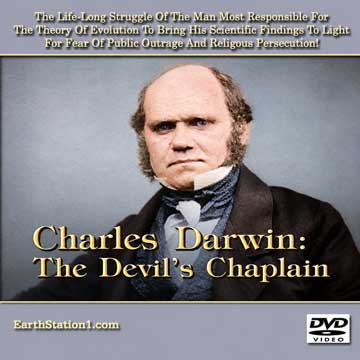
June 30, 1860: Evolution: The Theory Of
Evolution: The 1860 Oxford Evolution Debate (The
Huxley-Wilberforce Debate, The Wilberforce-Huxley Debate): --
Oxford University Museum in Oxford, England holds a debate on the
theory of evolution advanced by Charles Darwin's book On the
Origin of Species published seven months prior. Several prominent
British scientists and philosophers participated, including Thomas
Henry Huxley, Bishop Samuel Wilberforce, Benjamin Brodie, Joseph
Dalton Hooker and Robert FitzRoy. The encounter is often known as
The Huxley-Wilberforce Debate or The Wilberforce-Huxley Debate,
although this description is somewhat misleading. It was not a
formal debate between the two, but rather it was an animated
discussion after the presentation of a paper by John William
Draper of New York University, on the intellectual development of
Europe with relation to Darwin's theory (one of a number of
scientific papers presented during the week as part of the British
Association's annual meeting). Although Huxley and Wilberforce
were not the only participants in the discussion, they were
reported to be the two dominant parties. The debate is best
remembered today for a heated exchange in which Wilberforce
supposedly asked Huxley whether it was through his grandfather or
his grandmother that he claimed his descent from a monkey. Huxley
is said to have replied that he would not be ashamed to have a
monkey for his ancestor, but he would be ashamed to be connected
with a man who used his great gifts to obscure the truth. However,
what Huxley and Wilberforce actually said is uncertain, and
subsequent accounts were subject to distortion since no verbatim
account of the debate exists. One eyewitness suggests that
Wilberforce's question to Huxley may have been "whether, in
the vast shaky state of the law of development, as laid down by
Darwin, any one can be so enamoured of this so-called law, or
hypothesis, as to go into jubilation for his great great
grandfather having been an ape or a gorilla?", whereas
another suggests he may have said that "it was of little
consequence to himself whether or not his grandfather might be
called a monkey or not." On Sale Till Midnight PT!
https://store.earthstation1.com/charles-darwin-the-devil39s-chaplain-theory-of-evolution-sa39.html
Today's
EarthStation1.com 15% Off (Or More!) Commemorative Memorial Title:
Albert Einstein: How I See The World DVD, Video Download, USB
Drive
Today, June 30, 2026
June 30, 1905: Great Discoveries: Great
Discoveries Of Physics: Special Relativity (The Special Theory Of
Relativity, SR, STR): The Annus Mirabilis Papers (Latin:
"Extraordinary Year") (English: "Miracle Year",
German: Wunderjahr, "Miracle Year") (Albert Einstein's
Four 1905 Annalen Der Physik Papers): On The Electrodynamics Of
Moving Bodies: -- Albert Einstein sends the article On The
Electrodynamics Of Moving Bodies, in which he introduces special
relativity, for publication in Annalen der Physik. This paper is
considered to be one of the four Annus Mirabilis Papers, the
papers of Albert Einstein published in the Annalen der Physik
scientific journal in 1905, all of which contributed substantially
to the foundation of modern physics and changed views on space,
time, mass, and energy. In physics, special relativity is the
generally accepted and experimentally well-confirmed physical
theory regarding the relationship between space and time. In
Albert Einstein's original pedagogical treatment, it is based on
two postulates: 1) The laws of physics are invariant (identical)
in all inertial systems (non-accelerating frames of reference);
and 2) The speed of light in a vacuum is the same for all
observers, regardless of the motion of the light source. On Sale
Till Midnight PT!
https://store.earthstation1.com/albert-einstein-how-i-see-the-world-dvd.html
Today's
EarthStation1.com 15% Off (Or More!) Commemorative Memorial Title:
Portraits Of The Presidency: POTUS Documentaries DVD, Download,
USB
Today, June 30, 2026
June 30, 1921: The United States: The
History Of The United States: The Supreme Court Of The United
States (SCOTUS): Appointments To The Supreme Court Of The United
States (SCOTUS): The Appointment Of Chief Justice Of The Supreme
Court William Howard Taft: -- U.S. President Warren G. Harding
appoints former President William Howard Taft Chief Justice of the
United States, a position in which he served until a month before
his death, making Taft the only person ever to have served in both
offices. Despite his personal ambition to become chief justice,
Taft declined repeated offers of appointment to the Supreme Court
Of The United States, believing his political work to be more
important. By Taft's later account, after some conversation,
Harding casually asked if Taft would accept appointment to the
Supreme Court; if Taft would, Harding would appoint him. Taft had
a condition for Harding - having served as president, and having
appointed two of the present associate justices and opposed
Brandeis, he could accept only the chief justice position. Harding
made no response, and Taft in a thank-you note reiterated the
condition and stated that Chief Justice White had often told him
he was keeping the position for Taft until a Republican held the
White House. In January 1921, Taft heard through intermediaries
that Harding planned to appoint him, if given the chance. Harding
was also considering a proposal by Justice William R. Day to crown
his career by being chief justice for six months before retiring.
Taft felt, when he learned of this plan, that a short-term
appointment would not serve the office well, and that once
confirmed by the Senate, the memory of Day would grow dim. After
Harding rejected Day's plan, Attorney General Harry Daugherty, who
supported Taft's candidacy, urged him to fill the vacancy, and he
named Taft on June 30, 1921. The Senate confirmed Taft the same
day, 61-4, without any committee hearings and after a brief debate
in executive session. Taft drew the objections of three
progressive Republicans and one southern Democrat. When he was
sworn in on July 11, he became the first and to date only person
to serve both as president and chief justice. When Taft became
chief justice, the court did not have its own building and met in
the Capitol. Its offices were cluttered and overcrowded, but
Fuller and White had been opposed to proposals to move the court
to its own building. In 1925, Taft began a fight to get the court
a building, and two years later Congress appropriated money to
purchase the land, on the south side of the Capitol. Cass Gilbert
had prepared plans for the building, and was hired by the
government as architect. Taft had hoped to live to see the court
move into the new building, but it did not do so until 1935, after
Taft's death. Chief Justice Taft was a conservative on business
issues and under him there were advances in individual rights. In
poor health, he resigned in February 1930, and died the following
month. He was buried at Arlington National Cemetery, the first
president and first Supreme Court justice to be interred there.
Taft is generally listed near the middle in historians' rankings
of U.S. presidents. #WarrenGHarding #WilliamHowardTaft #POTUS
#POTUSHistory #AmericanPresidents #ChiefJustice #SCOTUS
#AmericanHistory #USHistory #HistoryOfTheUS #WesternCulture
#WesternCivilization #OccidentalCulture #WesternWorld
#WesternSociety #WesternTradition #StoryOfCivilization #MP4
#VideoDownload #DVD On Sale Till Midnight PT!
https://store.earthstation1.com/portraits-of-the-presidency-roosevelt-wilson-hoover-taft-willkie.html
Today's
EarthStation1.com 15% Off (Or More!) Commemorative Memorial Title:
New York City History Documentary Collection MP4 Video Download
DVD
Today, June 30, 2026
June 30, 1996: The History Of
Broadcasting: The History Of Television Broadcasting: The History
Of American Television Broadcasting: The History Of Public
Broadcasting:: The History Of Municipal Broadcasting: American
Television Finales: Public Television Finales: Municipal
Television Finales: WNYC-TV: -- At midnight, New York City's
venerable and beloved public television station WNYC-TV signs off
for the final time. Twelve hours later, at noon on July 1, channel
31 reappeared as WBIS (branded as S+), carrying programming from
the Classic Sports Network most of the day, and infomercials in
overnights. The City of New York, which was one of the United
States' first municipalities to enter into broadcasting with the
1924 sign-on of WNYC radio, was granted a construction permit to
build a new commercial television station in 1954. Seven years
later, on November 5, 1961, WUHF took to the air for the first
time. Through the Municipal Broadcasting System, which held the
channel 31 license, the city (led by then-mayor Robert F. Wagner
Jr.) and the Federal Communications Commission (FCC) used WUHF as
an experiment to determine the viability of UHF broadcasts within
an urban environment. Some of the early programming on WUHF
included simulcasts of New York's existing commercial VHF
stations; educational films produced by WNYC's Television Film
Unit, established in 1949; college-level distance education
telecourses; and, reportedly, a nightly rundown of the New York
City Police Department's "wanted" criminals list. The
experiment was carried out through the installation of UHF
receivers in several hundred test homes, public schools and
businesses, with reception monitored by FCC and City engineers.
After a year of test broadcasting was deemed successful, full
control of WUHF was then transferred to the city. The station
became a full-time operation on November 5, 1962, with new call
letters WNYC-TV to match its sister radio stations WNYC (then at
830 AM and now at 820 AM) and WNYC-FM (93.9 MHz). Though the
channel 31 license was classified as commercial, WNYC-TV was
operated as a non-commercial educational station. Some of the
programming from the experimental period continued, and now
included live broadcasts of the United Nations General Assembly
meetings. As a municipally-owned station, WNYC-TV also devoted
airtime to shows focused on civic affairs, along with other
public-interest programs. The station also carried some
programming from National Educational Television (NET) and its
successor, the Public Broadcasting Service (PBS), but later
increasingly ran more independent educational television programs.
For many years, WNYC-TV ran a 15-minute newscast on weekdays,
called News from City Hall (later called News City and expanded to
30 minutes), highlighting the day's events in municipal
government. In 1979, Mayor Ed Koch considered selling the WNYC
stations to other interests due to a municipal fiscal crisis.
Instead, the WNYC Foundation was established as an outlet to raise
operating capital for the stations. Though there were twice-yearly
fundraising appeals made by the WNYC stations, WNYC-TV did not run
on-air pledge drives in a manner similar to other PBS stations,
mostly because it was a commercial licensee. It would not,
however, have faced any problems had it done so, as WNED-TV in
Buffalo, New York operated for decades as a non-commercial
broadcaster under a commercial license. Channel 31 also leased
blocks of airtime to foreign-language broadcasters. In the 1980s,
among the largest providers of foreign programming were Japan's
Fujisankei Communications Group, which aired a morning show on
weekdays, and RAI, the Italian public broadcaster which programmed
two hours on weeknights, and five hours on Sunday mornings, a
period which included airings of Italian soccer games. Also during
this era, WNYC-TV joined the music video phenomenon - and in the
process contributed to the growth of hip hop culture and rap
music. In the summer of 1983, channel 31 premiered the hour-long
Video Music Box, created by station employee Ralph McDaniels. The
program started off with an eclectic selection of videos from pop,
rock, and rhythm-and-blues artists. Rap music was also included,
but eventually the program became exclusive to the rap and R &
B genres. Video Music Box served as a launching pad for many rap
music artists, and was said to have been the basis behind MTV
creating Yo! MTV Raps several years later. Video Music Box would
remain prominently on WNYC-TV's schedule for the next decade (the
show now airs on WNYE-TV, channel 25). Shortly after becoming
mayor in 1994, Rudy Giuliani said that he was considering selling
the WNYC stations. Giuliani said that broadcasting was no longer
essential as a municipal entity, and that any financial
compensation would be used to help the City cover budget
shortfalls. The final decision was made in March 1995: the WNYC
radio stations would be sold to the WNYC Foundation, while the
city opted to solicit separate bids for WNYC-TV through a blind
auction. In August 1995, a partnership of Dow Jones and Company
and ITT Corporation (licensed as ITT-Dow Jones Television LLC) was
declared the winner of the WNYC-TV auction with a bid of 207M USD,
which at the time was the largest price ever paid for a UHF
television station. The sale of channel 31 to commercial interests
had many detractors. Foreign broadcasters complained, as they now
found themselves without an outlet for their programming, and
individual financial contributors criticized the Giuliani
administration for selling the station to the highest commercial
bidder, rather than to the WNYC Foundation. The foreign producers
found new outlets through WNYE-TV, Newton, New Jersey-based
WMBC-TV, and the City-owned Crosswalks cable TV network (now NYC
Media), and eventually dispersed among the many low power
television stations launched in the late 1990s and early 2000s,
and currently through various digital subchannels both on full and
low-power stations in the Tri-State. The sale took nearly a year
to become official, as licensing troubles with the FCC and the
aforementioned complaints from foreign broadcasters would
ultimately delay the transaction. Eventually, at midnight, June
30, 1996, WNYC-TV signed off for the final time. Twelve hours
later, at noon on July 1, channel 31 reappeared as WBIS (branded
as S+), carrying programming from the Classic Sports Network most
of the day, and infomercials in overnights. Meanwhile, Dow Jones
and ITT worked on their planned permanent format for WBIS, which
would offer business news during the day and professional sports
news and games at night. The S+ name was designed to mean "sports,
stocks, style, and success", as a nod to the format being
worked by both partners. Former WNYW general manager Carolyn Wall
was brought on board to supervise the launch of the station in the
same capacity. The launch of the new format was beset by many
difficulties: initially planned for that fall, it would be
ultimately delayed, as business, editorial and creative
differences between both partners concerned many station
employees. On Sale Till Midnight PT!
https://store.earthstation1.com/new-york-city-history-videos-3-dvd-se3.html
Today's
EarthStation1.com 15% Off (Or More!) Commemorative Memorial Title:
WWII Films: Combat Bulletins And Official War Films DVD, Download,
USB
Today, June 30, 2026
June 30, 1944: The European Civil War:
World War II: The Second European War (The European Theater Of
World War II): The Western Front Of World War II: Operation
Overlord (The Battle Of Normandy, The Normandy Campaign): D-Day
(The D-Day Landings, The Normandy Landings): The Battle Of
Cherbourg: -- With the fall of the strategically valuable port of
Cherbourg to American forces, The Battle Of Cherbourg ends in an
American victory. The Battle Of Cherbourg was part of the Battle
of Normandy during World War II. It was fought immediately after
the successful Allied landings on June 6, 1944. Allied troops,
mainly American, isolated and captured the fortified port, which
was considered vital to the campaign in Western Europe, in a
hard-fought, month-long campaign. The Germans had so thoroughly
wrecked and mined the port of Cherbourg that Hitler awarded the
Knight's Cross to Rear Admiral Walter Hennecke the day after he
surrendered for "a feat unprecedented in the annals of
coastal defense." The port was not brought into limited use
until the middle of August; although the first ships were able to
use the harbor in late July. Nevertheless, the Germans had
suffered a major defeat as a result of a rapid Allied build up on
their western flank and Hitler's rigid orders. General Friedrich
Dollmann, commanding the German Seventh Army, died on June 28,
having just been informed of a court martial pending as a result
of the capture of Cherbourg, reportedly from a heart attack but
possibly by suicide by poisoning. On Sale Till Midnight PT!
https://store.earthstation1.com/wwii-films-combat-bulletins-and-official-war-films-4-dvd4.html
Today's
EarthStation1.com 15% Off (Or More!) Commemorative Memorial Title:
WWII Films: The Asia-Pacific War DVD, Video Download, USB Flash
Drive
Today, June 30, 2026
June 30, 1943: World War II: The Pacific
War (The Asia-Pacific War, The Pacific Theater Of World War II):
The Pacific Ocean Theater Of World War II: Operation Cartwheel:
The Solomon Islands Campaign: The New Georgia Campaign (The New
Georgia Islands Campaign): The Landings On Rendova: -- American
and Pacific Islander troops conduct landings on Rendova Island and
several other amphibious operations throughout the nearby New
Georgia Islands Group, marking the beginning of The New Georgia
Campaign. The Allied forces spent July 1943 conducting the Drive
On Munda Point, shelling and bombing Japanese forces in and around
Munda Airfield, fighting off a large Japanese counterattack, and
eventually closing in on Munda overland, capturing it on August
4-5 during the Battle Of Munda Point. The airstrip on Munda, the
Japanese base on New Georgia Island that had been used to attack
American forces during the Battle Of Guadalcanal, was the main
objective of the assault on the island, which had been occupied by
the Empire Of Japan since the early stages of the war. The heavy
fighting left thousands dead on both sides and many more wounded.
New Georgia was secured by American forces on August 23, after
weeks of difficult and bloody fighting, and the Japanese evacuate
New Georgia Island on August 27, 1943, though fighting continued
on some nearby islands until October 1943. Donald Gilbert Kennedy
was a Coastwatcher stationed at Seghe (Segi) on New Georgia during
the Solomon Islands Campaign. For his services as a Coastwatcher,
he was awarded the Distinguished Service Order (DSO) (UK), and the
Navy Cross (U.S.). Since 1978, the island has been part of the
independent state of Solomon Islands. On Sale Till Midnight PT!
https://store.earthstation1.com/wwii-films-the-asiapacific-conflict-dvd.html
Today's
EarthStation1.com 15% Off (Or More!) Commemorative Memorial Title:
Civil Props: The Lockheed Constellation DVD, MP4 Download, USB
Drive
Today, June 30, 2026
June 30, 1956: Aviation: The History Of
Aviation: The History Of Civil Aviation: Aviation Incidents And
Accidents: The 1956 Grand Canyon Mid-Air Collision: -- A United
Airlines DC-7 strikes a Trans World Airlines (TW) Lockheed L-1049
Super Constellation on Saturday over Grand Canyon National Park,
Arizona. The DC-7 fell into a canyon and the Super Connie slammed
into a rock face. All 128 on board both airplanes perished, making
it the first commercial airline incident to exceed one hundred
fatalities. The airplanes had departed Los Angeles International
Airport minutes apart for Chicago and Kansas City, respectively.
The collision took place in uncontrolled airspace, where it was
the pilots' responsibility to maintain separation ("see and
be seen"). This highlighted the antiquated state of air
traffic control, which became the focus of major aviation reforms.
On Sale Till Midnight PT!
https://store.earthstation1.com/civil-props-the-lockheed-constellation-dvd.html
Today's
EarthStation1.com 15% Off (Or More!) Commemorative Memorial Title:
War Jets: The North American F-100 Super Sabre MP4 Video Download
DVD
Today, June 30, 2026
June 30, 1959: Aviation: The History Of
Aviation: The History Of Military Aviation: Aviation Incidents And
Accidents: The 1959 Okinawa F-100 Crash (The Miyamori Elementary
School Crash) (Japanese: Gongsen Xiaoxuexiao Mi Junji Zhuiluo
Shigu (Bongsen Xiaoxuexiao Mi Junji Zhuiluo Shigu)): -- A United
States Air Force North American F-100 Super Sabre from Kadena Air
Base in Okinawa crashes into nearby Ishikawa, Okinawa's Miyamori
Elementary School, killing 11 students plus six residents from the
local neighborhood. The fire caused by the accident was
extinguished one hour later, with 27 buildings including 3 school
buildings and 1 public building being destroyed, while 2 school
buildings, 2 private houses and eight other buildings were
half-destroyed. The US authorities determined that the defective
F-100 had experienced an engine fire despite recently undergoing
repairs in Taiwan, and that Schmitt had attempted to aim the
aircraft at an unpopulated hilly area before ejecting. The F-100
crash became a major tragedy in Okinawa as the victims were mostly
very young schoolchildren, and contributed to increasingly
ill-feelings towards the United States Civil Administration of the
Ryukyu Islands from the Okinawan community. The crash led to
fierce protests of anti-American sentiment in Okinawa, calling for
the US occupation authorities to leave and for the islands to be
returned to the control of the Government of Japan. The US
military immediately launched a compensation scheme for victims,
paying 4,500 USD for the dead and 2,300-5,900 USD for serious
injuries depending on disability. The US military paid a total of
119,066 USD in compensation for the accident, but this amount was
only about 10% of the victims requested. At 10:40 A.M., a United
States Air Force F-100D Super Sabre, piloted by 34-year-old
Captain John G. Schmitt Jr. from Chalmers, Indiana, became
uncontrollable during a training or test flight from Kadena Air
Base located in the towns of Kadena and Chatan. Schmitt ejected
from the aircraft, landing safely and unhurt. However, the F-100
crashed into Miyamori Elementary School and surrounding houses in
the nearby city of Ishikawa, killing 11 students and 6 other
people in the neighborhood, and injuring 210 others including 156
students at the school. At the time of the accident, Miyamori
Elementary School had about 1,000 children and teachers, with
almost all children in the school taking a milk break at the end
of the second hour of classes. Immediately after the crash, troops
of the armed police rushed to the accident site and worked on
rescue operations. Most of the doctors residing in central Okinawa
Island rushed to treat the victims. In 1965, a memorial statue for
the victims of the disaster was erected at the crash site in
Ishikawa. In 1976, a former student at Miyamori Elementary School
died at the age of 23 from complications related to burns caused
by the crash 17 years earlier. Their death brought the sum of
people killed in the F-100 crash to 18, and their name was added
to the monument in 2010. On June 30, 2009, 800 people, including
former students of Miyamori Elementary and relatives of the
victims, attended a 50th-anniversary memorial service at the crash
site, now in the city of Uruma. Okinawa Governor Hirokazu Nakaima
spoke at the ceremony, saying, "The Okinawa people of the
time were deeply saddened by the accident in which the lives of
children having dreams and hopes for the future were lost."
The F-100 crash and its aftermath were dramatized in the movie
Himawari, directed by Yoshihiro Oikawa, completed in 2012. On Sale
Till Midnight PT!
https://store.earthstation1.com/war-jets-the-north-american-f100-super-sabre-mp4-video-download1004.html
Today's
EarthStation1.com 15% Off (Or More!) Commemorative Memorial Title:
The Beatles Live At Budokan 1966 DVD MP4 Download USB Flash Drive
Today, June 30, 2026
June 30, 1966: Aesthetics: Performing
Arts: Premieres: Theatre Premieres: Musical Premieres: Japanese
Musical Premieres: The Beatles' 1966 Tour Of Germany, Japan And
The Philippines: The Beatles' Nippon Budokan Premiere (The
Beatles' Budokan Performance Premiere): -- In a historic cluster
of events, The Beatles become the first rock group to perform at
Budokan in a series of five shows held between June 30 and July 2,
1966; on the first day, June 30, John Lennon makes the band's
first comments in opposition to The Vietnam war, and the band
plays their appointed appearances despite multiple death threats
for supposedly defiling the Budokan arena with their presence and
their music. The Beatles' appearances were met with opposition
from those who felt the appearance of a western pop group would
defile the martial arts arena. The band's setlist included their
new single, "Paperback Writer", but no songs from their
recently completed album, Revolver. Often marked by poor playing,
the shows highlighted the division between what the group could
achieve when performing live as a four-piece with inadequate
amplification and the more complex music they were able to create
in the recording studio. The tour signalled a change in the
Beatlemania phenomenon, as violent measures were used to control
crowds for the first time and the band became a symbol of societal
division between conservative and liberal thinking. The bookings
at the Budokan, a venue reserved for martial arts, offended many
traditionalists in Japan, resulting in death threats to the
Beatles and a heightened police presence throughout their stay.
Nevertheless, the stay in Tokyo established an enduring bond
between the Beatles and Japan, where each of the band members
visited or performed in the decades following the group's break-up
in April 1970. The Beatles' flight to Tokyo stopped in Anchorage,
Alaska late on June 27, local time, and was grounded there due to
the presence of a typhoon over Japan. The Beatles' manager Brian
Epstein arranged for the Beatles to wait out the delay at
Anchorage's Westward Hotel, where the band's presence instantly
attracted a crowd of local fans, who serenaded them from the
street below. The flight finally arrived at Haneda Airport in
Tokyo in the early hours of June 29, according to a report by
Dudley Cheke, a charge d'affaires at the British Embassy.
Alternatively, an arrival time of around 3:30 a.m. on June 30 is
given by Beatles biographers Barry Miles and John Winn and in a
2016 Tokyo Weekender article about the visit. The Beatles served
as cultural ambassadors in Japan, where the authorities had viewed
the band in an unfavourable light until their appointment as MBEs
in 1965. The visit had been the subject of national debate and
coincided with an era in which Japan sought to re-establish its
cultural identity, following the country's defeat in World War II.
While the more progressive-minded elements of the population
welcomed the spirit of change and youthful optimism that the
Beatles represented, traditionalists were opposed to the band's
influence. To meet Epstein's requirement of 100K USD (equivalent
to 900K USD in 2023) for each performance, the 10,000-seat Nippon
Budokan hall was chosen; tickets were priced at twice the rate of
any previous visiting pop act. The announcement that the concerts
were to take place at the Budokan - a venue reserved for martial
arts, as well as a shrine to Japan's war dead - outraged the
country's hardline nationalists, who vowed to intercede and stop
the proceedings. This issue, combined with a written death threat
that the Beatles had received while in Hamburg, ensured that
security around the group was extreme throughout their stay. In an
operation that compared with Japan's measures when hosting the
1964 Olympic Games, around 35,000 police and fire brigade
personnel were mobilised to protect the Beatles. The four band
members descended from the aircraft dressed in happi coats bearing
the JAL logo. Their attire was a publicity coup for the airline,
who, recognising the value of being associated with the Beatles'
financial success, had instructed one of its First Class flight
attendants to ensure that the band emerged wearing these
traditional Japanese coats. Faced with a wall of glaring lights,
the four musicians believed they were waving to a throng of fans,
as was usual when they arrived in a new country. In fact, they
were surrounded by security personnel, and only twenty members of
the public were present to witness their arrival. Supervised by a
large police presence, the band's fans were instead organised in
groups along the road into the city. In a 2016 feature article on
the Beatles' Tokyo concerts, The Japan Times said that the
photograph of the group dressed in JAL happi coats and descending
from the plane had become "an iconic image of the Beatles'
visit". The Beatles were accommodated in the Presidential
Suite of the Tokyo Hilton. For the duration of their stay in
Japan, the band members were confined to the suite, aside from a
single press conference and the concert performances. During the
press conference, held in the afternoon of June 30, Lennon spoke
out publicly against the Vietnam War on the Beatles' behalf. This
marked the first time that the band had spoken out against the war
in one of their press conferences, and followed Lennon and
Harrison's warning to Epstein before the tour that they were no
longer prepared to stay silent on this issue. A scheduled group
visit to Kamakura on June 30 was cancelled after the Beatles
learned that the police could not guarantee their safety.
Accompanied by one of their road managers, Lennon and McCartney
each managed to venture out at one point, only to be escorted back
to the hotel once they were discovered. Starr recalls that every
time the Beatles had to leave for an engagement, the process was
handled with military-style precision by their Japanese hosts. To
lighten the mood, the band took to delaying their exit from the
hotel suite, thereby causing consternation for the time-conscious
security staff. The band played the first of their five concerts
at the Budokan on June 30. The support acts were all local
artists: the Drifters, Yuya Uchida, Isao Bitoh, the Blue Comets,
Hiroshi Mochizuki, and the Blue Jeans. The shows were sponsored by
the Japanese newspaper Yomiuri Shimbun and promoted by the Kyodo
Agency. Both the June 30 performance, when the Beatles were
dressed in dark green suits with red shirts, and the first show on
July 1, when they wore Hung On You-designed grey suits with thin
orange stripes, were filmed in colour by Nippon TV. The footage
was swiftly edited by the television company and combined with
brief segments of documentary footage for broadcast, as The
Beatles Recital: From Nippon Budokan, Tokyo, at 9:00 p.m. on July
1. As ultranationalist students demonstrated in the city and
outside the venue, the police presence was especially heavy inside
and around the stage. According to Tony Barrow, the police feared
that these right-wing students might have placed snipers in the
audience. The stage itself was set on an 8-foot-high podium; all
ground-floor seating had been cleared, meaning the audience was
restricted to the hall's first and second tiers. Concertgoers were
warned that anyone standing up or cheering risked being arrested.
The Beatles felt that the uniformed officers subdued the crowd,
although the Japanese fans' more reserved nature, relative to the
group's usual audiences, was also a factor. The band gave an
especially poor performance on June 30. According to Barrow and
Aspinall, the group were humbled by this, having grown accustomed
to not hearing themselves play, and resolved to perform well for
the remainder of the Budokan dates. During their extended periods
in the hotel suite, the Beatles collaborated on a
psychedelic-themed painting, using brushes and paints supplied by
one of the visiting tradesmen, and listened to a tape of their new
album. Whitaker photographed them at work and later commented: "I
never saw them calmer, more contented than at this time. They were
working on something that let their personalities come out _
They'd stop, go and do a concert and then it was, 'Let's go back
to the picture!'" Having struggled to find a title for the
new album since their arrival in Munich, the Beatles finally
settled on Revolver and informed EMI of their decision by telegram
on July 2. Whitaker recalled that, despite the hours of
confinement in the Hilton, the atmosphere within the band while in
Tokyo was "a crescendo of happiness". The Beatles and
their entourage departed for Manila in the Philippines, via Hong
Kong, mid-morning on July 3. The Japanese press were highly
favourable in their assessments of the Beatles' visit, with the
extreme security measures and the brevity of the band's
performances being the only areas of disappointment. Reporting to
the Foreign Office in London, Dudley Cheke wrote that the cyclone
over Japan had been replaced by a "Beatles typhoon",
which "swept the youth of Japan off their feet". The
Beatles embodied a new identity for the country's youth; in the
description of Japanese academic Toshinobu Fukuya, their presence
had signalled that "one did not always have to obediently
follow arrangements prescribed by adults; it was possible to
follow one's own path and still be socially and financially
successful in life." On July 15, the Beatles' stay in Japan
was the subject of an article in America's Life magazine. In the
words of Michael Stewart, Britain's ambassador to Tokyo, reporting
on the Beatles' visit, "In sober truth, no recent event
connected with the UK - apart from the sole exception of the
British Exhibition of 1965 - has made a comparable impact on
Tokyo... Most commentators accepted them for what indeed they are
- agreeable, talented and quick-witted young musicians." On
Sale Till Midnight PT!
https://store.earthstation1.com/the-beatles-live-at-budokan-1966-dvd-mp4-download-usb-flash-19664.html
Today's
EarthStation1.com 15% Off (Or More!) Commemorative Memorial Title:
Frank Zappa Documentaries MP4 Video Download DVD
Today, June 30, 2026
June 30, 1963: #BOTD: #HBD! Yngwie
Malmsteen, Swedish guitarist, songwriter, composer, and bandleader
is #born Lars Johan Yngve Lannerback in Stockholm, Sweden. Yngwie
Johan Malmsteen first became known in the 1980s for his
neoclassical metal playing style in heavy metal, and has released
20 studio albums in a career spanning almost 40 years. In 2009,
Time magazine rated Malmsteen as number 7 among the 10 greatest
electric guitar players of all time. On Sale Till Midnight PT!
https://store.earthstation1.com/frank-zappa-documentaries-mp4-video-download-dv4.html
Today's
EarthStation1.com 15% Off (Or More!) Commemorative Memorial Title:
The Road To War: Years Between WWI & WWII TV Series DVD,
Download, USB
Today, June 30, 2026
( #JCKaelin here: This is one of the most
disgraceful moments in the history of world generally and in the
history of world relations with Africa particularly. Many millions
of people died because the League Of Nations gave applause, and
nothing more, to Haile Selassie when he came to the League for aid
in the Italian invasion of Ethiopia, a mere three years before the
start of World War II. ) ========= June 30, 1936: The Interwar
Period (The Interbellum, Between The Wars): The Italo-Ethiopian
War (The Italo-Abyssinian War, The Italian Invasion Of Ethiopia,
The Italian Invasion Of Abyssinia): The Second Italo-Ethiopian War
(The Second Italo-Abyssinian War): -- Emperor Haile Selassie of
Abyssinia appeals for aid to the League Of Nations against Italy's
invasion of his country. Mussolini, upon invading Ethiopia, had
promptly declared his own "Italian Empire." Because the
League Of Nations afforded Haile Selassie the opportunity to
address the assembly, Italy even withdrew its League delegation on
12 May 1936. It was in this context that Haile Selassie walked
into the hall of the League Of Nations, introduced by the
President of the Assembly as "His Imperial Majesty, the
Emperor of Ethiopia". The introduction caused a great many
Italian journalists in the galleries to erupt into jeering,
heckling, and whistling. As it turned out, they had earlier been
issued whistles by Mussolini's son-in-law, Count Galeazzo Ciano.
The Romanian delegate, Nicolae Titulescu, famously jumped to his
feet in response and cried "To the door with the savages!",
and the offending journalists were removed from the hall. Haile
Selassie waited calmly for the hall to be cleared, and responded
"majestically" with a speech considered to be among the
most stirring of the 20th century. Although fluent in French, the
working language of the League, Haile Selassie chose to deliver
his historic speech in his native Amharic. He asserted that,
because his "confidence in the League was absolute", his
people were now being slaughtered. He pointed out that the same
European states that found in Ethiopia's favor at the League Of
Nations were refusing Ethiopia credit and supplies while aiding
Italy, which was employing chemical weapons on military and
civilian targets alike. "It was at the time when the
operations for the encircling of Makale were taking place that the
Italian command, fearing a rout, followed the procedure which it
is now my duty to denounce to the world. Special sprayers were
installed on board aircraft so that they could vaporize, over vast
areas of territory, a fine, death-dealing rain. Groups of nine,
fifteen, eighteen aircraft followed one another so that the fog
issuing from them formed a continuous sheet. It was thus that, as
from the end of January 1936, soldiers, women, children, cattle,
rivers, lakes, and pastures were drenched continually with this
deadly rain. In order to kill off systematically all living
creatures, in order to more surely poison waters and pastures, the
Italian command made its aircraft pass over and over again. That
was its chief method of warfare.". Noting that his own "small
people of 12 million inhabitants, without arms, without resources"
could never withstand an attack by a large power such as Italy,
with its 42 million people and "unlimited quantities of the
most death-dealing weapons", he contended that all small
states were threatened by the aggression, and that all small
states were in effect reduced to vassal states in the absence of
collective action. He admonished the League that "God and
history will remember your judgment.". "It is collective
security: it is the very existence of the League Of Nations. It is
the confidence that each State is to place in international
treaties_ In a word, it is international morality that is at
stake. Have the signatures appended to a Treaty value only in so
far as the signatory Powers have a personal, direct and immediate
interest involved?". The speech made the emperor an icon for
anti-fascists around the world, and Time named him "Man of
the Year". He failed, however, to get what he most needed:
the League agreed to only partial and ineffective sanctions on
Italy. Only six nations in 1937 did not recognize Italy's
occupation: China, New Zealand, the Soviet Union, the Republic of
Spain, Mexico and the United States. On Sale Till Midnight PT!
https://store.earthstation1.com/the-road-to-war-dvd-set-all-8-tv-shows-4-dis84.html
Today's
EarthStation1.com 15% Off (Or More!) Commemorative Memorial Title:
Entertaining The Troops: American Entertainers In World War II MP4
DVD
Today, June 30, 2026
June 30, 1917: #BOTD: #HBD! Lena Horne,
African American singer, dancer, actress, civil rights activist,
class act and beauty (d. May 9, 2010) is #born Lena Mary Calhoun
Horne in Bedford-Stuyvesant, Brooklyn into the African American
upper class. Lena Horne had a career that spanned over 70 years
appearing in film, television, and theater. Horne joined the
chorus of the Cotton Club at the age of 16 and became a nightclub
performer before moving to Hollywood, where she had small parts in
numerous movies, and more substantial parts in the 1943 films
Cabin in the Sky and Stormy Weather. Because of the Red Scare and
her political activism, Horne found herself blacklisted and unable
to get work in Hollywood. Returning to her roots as a nightclub
performer, Horne took part in the March on Washington in August
1963 and continued to work as a performer, both in nightclubs and
on television while releasing well-received record albums. She
announced her retirement in March 1980, but the next year starred
in a one-woman show, Lena Horne: The Lady and Her Music, which ran
for more than three hundred performances on Broadway. She then
toured the country in the show, earning numerous awards and
accolades. Horne continued recording and performing sporadically
into the 1990s, disappearing from the public eye in 2000. Horne
died of congestive heart failure on May 9, 2010, at the age of 92.
Her funeral took place at St. Ignatius Loyola Church on Park
Avenue in New York, where she had been a member. Thousands
gathered and attendees included: Leontyne Price, Dionne Warwick,
Liza Minnelli, Jessye Norman, Chita Rivera, Cicely Tyson, Diahann
Carroll, Leslie Uggams, Lauren Bacall, Robert Osborne, Audra
McDonald, and Vanessa Williams. Her remains were cremated, and the
disposition of her ashes are not publicly known. On Sale Till
Midnight PT!
https://store.earthstation1.com/entertaining-the-troops-american-entertainers-in-world-war-ii-mp4-dvd.html
Today's
EarthStation1.com 15% Off (Or More!) Commemorative Memorial Title:
TV Music & Dance Shows #12 Shindig Stones Supremes DVD MP4
Flash Drive
Today, June 30, 2026
June 30, 1943: #BOTD: #HBD! Florence
Ballard, African American pop and soul singer, founding member of
the popular Motown vocal female group the Supremes (d. February
22, 1976) is #born Florence Glenda Chapman in Detroit, Michigan.
Florence Glenda Ballard Chapman sang on 16 top forty singles with
the group, including ten number-one hits. After being removed from
the Supremes in 1967, Ballard tried an unsuccessful solo career
with ABC Records before she was dropped from the label at the end
of the decade. Ballard struggled with alcoholism, depression, and
poverty for three years. She was making an attempt for a musical
comeback when she died of a heart attack in Detroit, Michigan at
the age of 32. She is buried at Detroit Memorial Park East in
Warren, Michigan. Ballard's death was considered by one critic as
"one of rock's greatest tragedies". Ballard was
posthumously inducted to the Rock and Roll Hall of Fame as a
member of the Supremes in 1988. On Sale Till Midnight PT!
https://store.earthstation1.com/classic-tv-music-amp-dance-shows-12-shindig-stones-supremes-d12.html
Today's
EarthStation1.com 15% Off (Or More!) Commemorative Memorial Title:
Women's Rights Women's Suffrage The Women's Movement MP4 Download
DVD
Today, June 30, 2026
June 30, 1966: Feminism: The Feminist
Movement (The Women's Movement): The Women's Liberation Movement
(Women's Lib, WLM): The National Organization for Women (NOW): --
The United States' largest feminist organization is founded by 28
women at the Third National Conference Of Commissions On The
Status Of Women. the successor to the Presidential Commission On
The Status Of Women). The 28 founders of The National Organization
for Women (NOW) were: Ada Allness, Mary Evelyn Benbow, Gene Boyer,
Shirley Chisholm, Analoyce Clapp, Kathryn F. Clarenbach, Catherine
Conroy, Caroline Davis, Mary Eastwood, Edith Finlayson, Betty
Friedan, Dorothy Haener, Anna Roosevelt Halstead, Lorene
Harrington, Aileen Hernandez, Mary Lou Hill, Esther Johnson, Nancy
Knaak, Min Matheson, Helen Moreland, Pauli Murray, Ruth Murray,
Inka O'Hanrahan, Pauline A. Parish, Eve Purvis, Edna Schwartz,
Mary-Jane Ryan Snyder, Gretchen Squires, Betty Talkington and
Caroline Ware. Another 21 women and men who became founders at the
October 1966 NOW Organizing Conference, for a total of 49
founders. They were inspired by the failure of the Equal
Employment Opportunity Commission to enforce Title VII of the
Civil Rights Act of 1964; at the Third National Conference of
State Commissions on the Status of Women they were prohibited from
issuing a resolution that recommended the EEOC carry out its legal
mandate to end sex discrimination in employment. They thus
gathered in Betty Friedan's hotel room to form a new organization.
On a paper napkin Friedan scribbled the acronym "NOW".
Even after measures like the Equal Employment Opportunity
Commission (EEOC) and Title VII of the Civil Rights Act of 1964,
employers were still discriminating against women in terms of
hiring women and unequal pay with men. Women's rights advocates
saw that these legal changes were not being enforced and worried
that without a feminist pressure group, a type of "NAACP for
women", women would not be able to combat discrimination. NOW
was created in order to mobilize women, give women's rights
advocates the power to put pressure on employers and the
government, and to promote full equality of the sexes. It hoped to
increase the number of women attending colleges and graduate
schools, employed in professional jobs instead of domestic or
secretarial work, and appointed to federal offices. As of 2023,
NOW is a 501(c) social welfare organization consisting of 550
chapters in all 50 U.S. states and in Washington, D.C. with around
500,000 members. NOW is regarded as one of the main liberal
feminist organizations in the US, and primarily lobbies for gender
equality within the existing political system. NOW campaigns for
constitutional equality, economic justice, reproductive rights,
LGBTQIA+ rights and racial justice, and against violence against
women. On Sale Till Midnight PT!
https://store.earthstation1.com/women39s-suffrage-amp-the-women39s-movement-dvd-mp4-usb-39394.html
Today's
EarthStation1.com #OnThisDay Commemorative Memorial Title:
Remember When: On The Air: Radio History Dick Cavett MP4 Download
DVD
Today, June 30, 2026 June 30, 1961: #DOTD: #RIP: Lee De
Forest, American inventor, self-described "Father of Radio",
and a pioneer in the development of sound-on-film recording used
for motion pictures (b. August 26, 1873) #dies of unspecified
causes in Hollywood, California, aged 87. He is interred in San
Fernando Mission Cemetery in Los Angeles, California. De Forest
died relatively poor, with just 1,250 USD in his bank account. Lee
De Forest was born at Council Bluffs, Iowa. He had over 180
patents, but also a tumultuous career -- he boasted that he made,
then lost, four fortunes. He was also involved in several major
patent lawsuits, spent a substantial part of his income on legal
bills, and was even tried (and acquitted) for mail fraud. His most
famous invention, in 1906, was the three-element "Audion"
(triode) vacuum tube, the first practical amplification device.
Although De Forest had only a limited understanding of how it
worked, it was the foundation of the field of electronics, making
possible radio and television broadcasting, long distance
telephone lines, and talking motion pictures, among countless
other applications.
https://store.earthstation1.com/remember-when-on-the-air-dvd-us-radio-history-dick-cavett.html
June 30, 1961: #DOTD: #RIP: Lee De
Forest, American inventor, self-described "Father of Radio",
and a pioneer in the development of sound-on-film recording used
for motion pictures (b. August 26, 1873) #dies of unspecified
causes in Hollywood, California, aged 87. He is interred in San
Fernando Mission Cemetery in Los Angeles, California. De Forest
died relatively poor, with just 1,250 USD in his bank account. Lee
De Forest was born at Council Bluffs, Iowa. He had over 180
patents, but also a tumultuous career -- he boasted that he made,
then lost, four fortunes. He was also involved in several major
patent lawsuits, spent a substantial part of his income on legal
bills, and was even tried (and acquitted) for mail fraud. His most
famous invention, in 1906, was the three-element "Audion"
(triode) vacuum tube, the first practical amplification device.
Although De Forest had only a limited understanding of how it
worked, it was the foundation of the field of electronics, making
possible radio and television broadcasting, long distance
telephone lines, and talking motion pictures, among countless
other applications.
https://store.earthstation1.com/remember-when-on-the-air-dvd-us-radio-history-dick-cavett.html
Today's
EarthStation1.com #OnThisDay Commemorative Memorial Title: TV
Commercials: The Mego Toy Classics DVD, MP4 Download, USB Drive
Today, June 30, 2026June 30, 1993: #DOTD: #RIP: Spanky
McFarland, American actor most famous for starring as a child as
Spanky in Hal Roach's Our Gang series of short-subject comedies of
the 1930s and 1940s that were later syndicated to television as
The Little Rascals (b. October 2, 1928) #dies of either a heart
attack or an aneurysm at his home in Grapevine, Texas, aged 64.
his remains were cremated shortly thereafter. He is buried in an
unmarked grave at the Texas State Cemetery in Austin, Texas,
Statesman's Meadow, Section 2 (G) Row G, Number 26; a cenotaph was
approved for McFarland to be placed at the site, but according to
the cemetery's website, as of June 30, 2026 it has yet to be
installed, after over 30 years. He appeared on the television show
"Cheers" shortly before his death. McFarland was born in
Dallas, Texas to Virginia Winifred (nee Phillips) and Robert
Emmett McFarland. He had three siblings: Thomas ("Tommy",
who appeared in a few Our Gang episodes as "Dynamite"),
Amanda, and Roderick ("Rod"). He attended Lancaster High
School in Lancaster, Texas. Before joining the Our Gang comedies,
"Sonny", as he was called by his family, modeled
children's clothing for a Dallas department store and was also
seen around the Dallas area on highway billboards and in print
advertisements for Wonder Bread. This established Sonny early on
in the local public's eye as an adorable child model and provided
experience before cameras. In addition to his work in Our Gang and
its feature-film spin-off General Spanky (1936), McFarland
regularly appeared in co-starring or supporting juvenile roles in
feature films produced by other studios throughout the 1930s.
These included Kentucky Kernels (1934) with Bert Wheeler and
Robert Woolsey, The Trail of the Lonesome Pine (1936) with Sylvia
Sidney and Fred MacMurray, and Peck's Bad Boy with the Circus
(1938). Leaving acting as a teenager, McFarland had several
varying careers as an adult before finding success as a sales
executive. He spent the final decades of his life as a public
speaker reflecting on his child-acting career.
https://store.earthstation1.com/tv-commercials-the-mego-toy-classics-dvd.html
Today's
EarthStation1.com #OnThisDay Commemorative Memorial Title: Fireman
Save My Child 1954 Spike Jones & His City Slickers DVD MP4 USB
Today, June 30, 2026June 30, 2003: #DOTD: #RIP: Buddy
Hackett, American actor, comedian and singer (b. August 31, 1924)
#dies of heart disease at his beach house in Malibu, California,
aged 78. His son, comedian Sandy Hackett, said his father had been
suffering from diabetes for several years and suffered a stroke
nearly a week before his death, which may have contributed to his
demise. Two days later, on July 2, 2003, he was cremated and his
ashes were given to family and friends. Buddy Hackett was born
Leonard Hacker into a Jewish family living in Brooklyn, New York.
His best remembered roles include Marcellus Washburn in The Music
Man (1962); Benjy Benjamin in It's a Mad, Mad, Mad, Mad World
(1963); Tennessee Steinmetz in The Love Bug (1968); and the voice
of Scuttle in The Little Mermaid (1989).
https://store.earthstation1.com/fireman-save-my-child-1954-dvd-spike-jones-buddy-hac1954.html
Today's
EarthStation1.com #OnThisDay Commemorative Memorial Title: Lost
Soupy Sales TV Pilots Collection DVD, MP4 Download, USB Stick
Today, June 30, 2026June 30, 1995: #DOTD: #RIP: Gale Gordon,
American character actor of radio and television, perhaps best
remembered as Lucille Ball's longtime television foil, and
particularly as the cantankerously combustible, tightfisted bank
executive Theodore J. Mooney on Ball's second television situation
comedy, The Lucy Show (b. February 20, 1906) #dies of lung cancer
at the Redwood Terrace Health Center in Escondido, California,
aged 89. Virginia Curley, his wife of nearly 60 years, had died in
the same facility one month earlier. The couple had no children.
His remains were cremated, and his ashes given to his family or
his friend(s). Gale Gordon was born Charles Thomas Aldrich Jr in
New York City to vaudevillian Charles Thomas Aldrich and his wife,
English actress Gloria Gordon. Gordon also appeared in I Love Lucy
and had starring roles in Ball's successful third series Here's
Lucy and her short-lived fourth and final series Life with Lucy.
Gordon was also a respected and beloved radio actor who is
remembered for his role as school principal Osgood Conklin in Our
Miss Brooks, starring Eve Arden, in both the 1948-1957 radio
series and the 1952-1956 television series. He also co-starred as
the second Mr. Wilson in Dennis the Menace.
https://store.earthstation1.com/lost-soupy-sales-tv-pilots-dual-layer-dvd.html
Today's
EarthStation1.com #OnThisDay Commemorative Memorial Title: The
Golden Age Of Comedy 5 Album Set CD, MP3, USB Stick
Today, June 30, 2026June 30, 1927: #BOTD: #HBD! Pat
McCormick, American actor and comedy writer known for playing Big
Enos Burdette in Smokey and the Bandit and its two sequels (d.
July 29, 2005) is #born in Lakewood, Ohio. He wrote for a number
of performers such as Red Skelton, Phyllis Diller, Johnny Carson,
Jonathan Winters, Jack Paar and Danny Kaye, as well as for
television shows including Get Smart and Candid Camera. He was
also a member of the I've Got a Secret production staff in the
early 1960s. McCormick had a distinctive appearance being 6'7"
tall, weighing 250 lbs and having a walrus mustache. McCormick was
a 1945 athlete graduate of Rocky River High School and served in
the United States Army during World War II. He then enrolled at
Harvard University as a freshman in the autumn of 1947 where he
played basketball that year. He later dropped basketball to
concentrate on track (hurdles). He dropped out of Harvard Law
School for a career in advertising, but abandoned that career as
well when he started writing jokes for television and standup
comedians. McCormick was both the announcer and straight man for
Don Rickles on The Don Rickles Show in 1968. He was a regular on
The New Bill Cosby Show in 1972. Behind the scenes, he was one of
the lead writers on The Tonight Show writing many of its most
well-known lines. He wrote the line "Due to today's
earthquake, the God is Dead rally has been canceled." As part
of a skit on a Jonathan Winters special McCormick, as a court
jester, quipped to the regally-attired Winters "Is that a
scepter in your pocket, or are you just happy to see me?" a
quite risque line for early 1970s television. His first screen
performance was in The Shaggy D.A. in 1976. He played President
Grover Cleveland in Robert Altman's Buffalo Bill and the Indians,
or Sitting Bull's History Lesson in the same year. In 1977, he
appeared in Smokey and the Bandit and appeared in the sequels in
both 1980 and 1983, alongside Paul Williams as wealthy con men Big
and Little Enos Burdette respectively. Pat appeared in the 1982 TV
movie Rooster, which also starred Williams. He appeared as the
Ghost of Christmas Present in a TV production in the Bill Murray
comedy Scrooged in 1988, with his final appearance being in Ted &
Venus. Living in Palm Springs, California in 1996, McCormick
retired in 1998 after being left partly paralyzed by a stroke.
According to fellow writer Mark Evanier, McCormick was driving to
the Beverly Hilton Hotel when he suffered a stroke and crashed his
car into a concrete wall. The vehicle caught fire, but a woman
named Danielle Villegas pulled him out and dragged him to safety
before the car exploded. McCormick was admitted to the Motion
Picture and Television Country House and Hospital in Woodland
Hills, California, where he spent the remainder of his life. He
died there seven years later, aged 78. He is interred in Forest
Lawn Memorial Park in Hollywood Hills. He was survived by a son,
Ben, and a grandson.
https://store.earthstation1.com/golden-age-of-comedy-narrated-by-george-burns-5-album-set-mp3-53.html
Today's
EarthStation1.com #OnThisDay Commemorative Memorial Title: The
Golden Age Of Comedy 5 Album Set CD, MP3, USB Stick
Today, June 30, 2026June 30, 1900: #BOTD: #HBD! Frank Gallop,
versatile American radio and television personality, singer,
narrator and comedian (d. May 17, 1988) is #born into a Jewish
family in Boston, Massachusetts. Gallop established a career as a
radio announcer on CBS and later with NBC; he was described as
"the only announcer who sounds like he's wearing spats."
As the announcer on radio's The Milton Berle Show, he was a comic
foil for Berle. Gallop was also the announcer for Perry Como's
1950s - 1960s television shows. On February 13, 1964, Gallop made
an unannounced appearance on Perry Como's Kraft Music Hall show
dressed as a Beatle, mere days after their first appearance on The
Ed Sullivan Show. He sang a number of novelty songs in the 1950s
and 1960s, most notably The Ballad Of Irving, a Jewish-humored
parody of Lorne Greene's song "Ringo", which reached #2
on the U.S. Adult Contemporary chart, #34 on the Billboard Hot
100, and #35 in Canada. The song was also distributed in the UK by
Decca Records. It was a popular song on the Dr. Demento radio show
and has been included in at least one compilation album from the
Demento show. "Irving" became part of an album, Would
You Believe Frank Gallop Sings? This was followed by "The Son
of Irving" in 1966. Gallop's hit Kapp album was called, When
You're in Love the Whole World is Jewish; he toured several US
cities as the result of his music's popularity. Gallop narrated
the first Casper the Friendly Ghost cartoon in 1945. He also
narrated two later "Casper" cartoons, There's Good Boos
To-Night in 1948, and A-Haunting We Will Go in 1949. He was the
narrator for an ABC animated children's program, Cartoonies, for
six months in 1963. Gallop was also the narrator for a 1961
documentary The Legend of Rudolph Valentino and a 1962 Buster
Keaton documentary, The Great Chase. In the mid 1940s, Frank
Gallop met a beautiful chorus girl from Texas named Mary Lou
Bentley (also Bently) who had been having a relationship with
Walter Winchell. When her presence in the columnist's life became
evident to his family and she realized he would not divorce his
wife, she tried ending the relationship with Winchell and became
Gallop's neighbor by moving into his Park Avenue apartment
building. A romance developed between the pair, and at some point
before 1946, they were married. Winchell was unwilling to concede
the end of their relationship and continued to pursue Bentley with
flowers and other gifts. Gallop became the object of his wrath.
Winchell was able to have him constantly followed by police. He
also learned where Gallop was auditioning for announcing jobs and
convinced radio program sponsors not to hire him. Gallop was fired
from a soap opera announcing job because of Winchell's pressure.
By 1948, the couple divorced. Gallop liked being well-dressed,
with a closet full of suits and ties for all occasions. He
contended that the very strong coffee he brewed was wonderful,
while his friends would ask for tea instead after sampling it. He
admitted to being somewhat superstitious in some respects such as
stopping at the same newsstand after work because he had been a
customer there after his first Lights Out appearance. Gallop also
said he disliked having the trait. In addition to doing his own
decorating, Gallop collected art. Remaining active in announcing
into the 1970s, Gallop divided his time between homes in New York
and Palm Beach, Florida. Despite being a former investment
consultant, Gallop said in a 1958 interview that he had "never
made a nickel in the market in my life." Frank Gallop died of
natural causes in Palm Beach, Florida, aged 87. His burial details
are not publicly disclosed.
https://store.earthstation1.com/golden-age-of-comedy-narrated-by-george-burns-5-album-set-mp3-53.html
Today's
EarthStation1.com #OnThisDay Commemorative Memorial Title: Jack
Benny Complete Radio Broadcasts Set MP3 DVD, Audio Download, USB
Today, June 30, 2026June 30, 1983: #DOTD: #RIP: Mary
Livingstone, American radio comedienne, actress and beauty, wife
and radio partner of comedian Jack Benny (b. June 25, 1905)#dies
of heart disease at her home in Holmby Hills, Los Angeles,
California, eight and a half years after Jack's passing and five
days after her 78th birthday, after completing a biography of her
husband. She is buried at Hillside Memorial Park, Culver City, Los
Angeles County, California. Mary Livingstone, whose surname is
often misspelled without the 'e', as with her star on the
Hollywood Walk of Fame for her contribution to radio, was born
Sadya Marcowitz in Seattle, Washington to a Romanian Jewish
immigrant father and a mother of mixed German Jewish and Polish
Jewish ancestry. Her family changed their surname to Marks several
years after Sadya's birth, and Sadya changed her name to Sadie.
Sadya Marks' brother, Hilliard Marks, was a radio and television
producer who worked primarily for his future brother-in-law, Jack
Benny. She first met her future husband Jack Benny in Vancouver at
a Passover seder in her family home in 1922, when Benny was
playing the Orpheum Theatre. Benny accompanied his friend Zeppo
Marx of The Marx Brothers, where they enjoyed a quiet and
comfortable gathering. Sadie was very impressed by this comedian
who played a violin as part of his act. By her own testimony she
made up her mind that she would grow up and marry Jack Benny
someday. Enlisted casually to perform on her husband's program,
she proved a talented and popular comedian. However, she was one
of the rare performers to experience severe stage fright years
after her career was established, so much so that she retired from
show business completely, after two decades in the public eye,
almost three decades before her death and at the height of her
husband and partner's fame. Jack Benny was far more concerned
about her well being than their act, and supported her decision;
in his will, he arranged for a single long-stemmed red rose to be
delivered to her every day for the rest of her life.
https://store.earthstation1.com/jack-benny-complete-radio-broadcasts-dual-layer-mp3-dv3.html
Today's
EarthStation1.com #OnThisDay Commemorative Memorial Title: Heroes
Still... The Bataan Death March DVD, MP4 Download, USB Drive
Today, June 30, 2026June 30, 1917: #BOTD: #HBD! Susan
Hayward, American actress, American actress and fashion model,
best known for her film portrayals of women that were based on
true stories (d. March 14, 1975) is #born Edythe Marrenner in
Brooklyn, New York City. Hayward traveled to Hollywood in 1937
sfter working as a fashion model to audition for the role of
Scarlett O'Hara. She secured a film contract and played several
small supporting roles over the next few years. By the late 1940s,
the quality of her film roles improved, and she achieved
recognition for her dramatic abilities with the first of five
Academy Award for Best Actress nominations for her performance as
an alcoholic in Smash-Up, the Story of a Woman (1947). Hayward's
success continued through the 1950s as she received nominations
for My Foolish Heart (1949), With a Song in My Heart (1952), and
I'll Cry Tomorrow (1955), winning the award for her portrayal of
death row inmate Barbara Graham in I Want to Live! (1958). After
Hayward's second marriage and subsequent move to Georgia, her film
appearances became infrequent, although she continued acting in
film and television until 1972. Susan Hayward died in her Beverly
Hills home on March 14, 1975 at the age of 57 of brain cancer.
Theories about the radioactive fallout from atmospheric atomic
bomb tests surround the making of The Conqueror in St. George,
Utah, near nuclear test sites. Several production members
including Hayward, John Wayne, Agnes Moorehead, Pedro Armendariz,
and director Dick Powell later succumbed to cancer and
cancer-related illnesses. As ascertained by People magazine in
1980, out of a cast and crew totaling 220 people, 91 of them
developed some form of cancer, and 46 had died of the disease.
Susan Hayward's funeral service was held on March 16 at Our Lady
of Perpetual Help Roman Catholic Church in Carrollton, Georgia.
Hayward's body was buried in the church's cemetery.
https://store.earthstation1.com/heroes-still-the-bataan-death-march-dvd-mp4-us4.html
Today's
EarthStation1.com #OnThisDay Commemorative Memorial Title: The
Spanish Earth 1937 + Bonus For Whom The Bell Tolls DVD, MP4, USB
Today, June 30, 2026June 30, 1984: #DOTD: #RIP: Lillian
Hellman, American playwright, author, and screenwriter known for
her success on Broadway, as well as her communist sympathies and
political activism (b. June 20, 1905) #dies aged 79 from a heart
attack near her home on Martha's Vineyard, Massachusetts, and is
buried beneath a pine tree on a rise at one end of Abels
Hill/Chilmark Cemetery, Chilmark, Martha's Vineyard. She was born
Lillian Florence Hellman in New Orleans, Louisiana to a Jewish
family. She was blacklisted after her appearance before the House
Committee on Un-American Activities (HUAC) at the height of the
anti-communist campaigns of 1947-1952. Although she continued to
work on Broadway in the 1950s, her blacklisting by the American
film industry caused a drop in her income. Many praised Hellman
for refusing to answer questions by HUAC, but others believed,
despite her denial, that she had belonged to the Communist Party.
In December 1936, her play Days to Come closed its Broadway run
after just seven performances. In it, she portrayed a labor
dispute in a small Ohio town during which the characters try to
balance the competing claims of owners and workers, both
represented as valid. Communist publications denounced her failure
to take sides. That same month she joined several other literary
figures, including Dorothy Parker and Archibald MacLeish, in
forming and funding Contemporary Historians, Inc., to back a film
project, The Spanish Earth, to demonstrate support for the
anti-Franco forces in the Spanish Civil War. In October 1937,
Hellman spent a few weeks in Spain to lend her support, as other
writers had, to the International Brigades of non-Spaniards who
had joined the anti-Franco side in the Spanish Civil War. As bombs
fell on Madrid, she broadcast a report to the U.S. on Madrid
Radio. In 1989, journalist and Ernest Hemingway's third wife,
Martha Gellhorn, herself in Spain at that period, disputed the
account of this trip in Hellman's memoirs and claimed that Hellman
waited until all the witnesses were dead before describing events
that never occurred. Nevertheless, Hellman had documented her trip
in the New Republic in April 1938 as "A Day in Spain."
Langston Hughes wrote admiringly of the radio broadcast in 1956.
As a playwright, Hellman had many successes on Broadway, including
Watch on the Rhine, The Autumn Garden, Toys in the Attic, Another
Part of the Forest, The Children's Hour and The Little Foxes. She
adapted her semi-autobiographical play The Little Foxes into a
screenplay, which starred Bette Davis. Hellman became the first
female screenwriter to receive an individual Academy Award
nomination for Best Adapted Screenplay in 1943. Hellman was
romantically involved with fellow writer and political activist
Dashiell Hammett, author of the classic detective novels The
Maltese Falcon and The Thin Man, who also was blacklisted for 10
years until his death in 1961. The couple never married. Beginning
in the late 1960s, and continuing through to her death, Hellman
turned to writing a series of popular memoirs of her colorful life
and acquaintances. Hellman's accuracy was challenged in 1979 on
The Dick Cavett Show, when Mary McCarthy said of her memoirs that
"every word she writes is a lie, including 'and' and 'the'."
Hellman brought a defamation suit against McCarthy and Cavett, and
during the suit, investigators found errors in Hellman's
Pentimento. They said that the "Julia" section of
Pentimento, which had been the basis for the Oscar-winning 1977
movie of the same name, was actually based on the life of Muriel
Gardiner. Martha Gellhorn, one of the most prominent war
correspondents of the twentieth century, as well as Ernest
Hemingway's third wife, said that Hellman's remembrances of
Hemingway and the Spanish Civil War were wrong. McCarthy, Gellhorn
and others accused Hellman of lying about her membership in the
Communist Party and of being an unrepentant Stalinist. The
defamation suit was unresolved at the time of Hellman's death in
1984; her executors eventually withdrew the complaint. Hellman's
modern-day literary reputation rests largely on the plays and
screenplays from the first three decades of her career, and not on
the memoirs published later in her life.
https://store.earthstation1.com/the-spanish-earth-dvd-1937-spanish-civil-war-ernest-hemin1937.html